Hitchadshut Feature – Rabbi Eliyahu Succot – The First Student
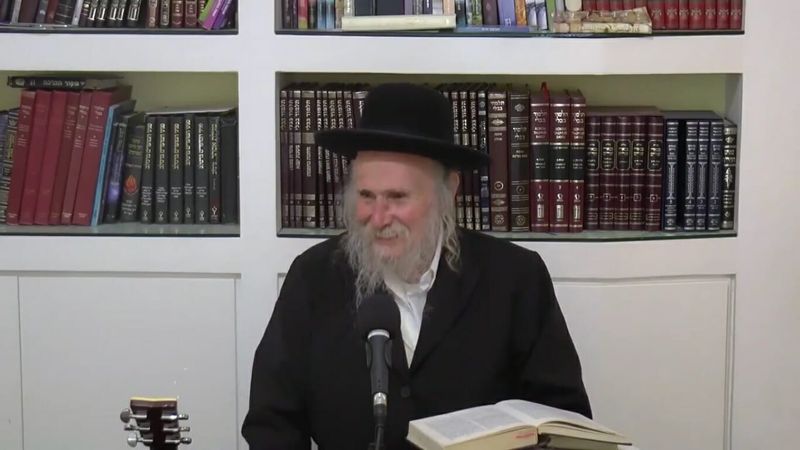
Motzei Shabbos Kodesh, Parshas VaEra, Rosh Chodesh Shevat – We’re making our way to the home of the first Talmid of our Rebbe, the Rav shlit”a, the Rav and Chasid Rabbi Eliyahu Succot to hear his story of how he became religious, and to take encouragement from words of Emunah (faith). The first hours of the evening are his sole hours of sleep. His day begins from the point of Chatzos (halachic midnight) with hisbodedus in the field, but nonetheless he freed up his precious and full time for us. Outside, freezing cold prevails, and storm winds and torrential rain escort us alongside the storm of controversy, God protect us. However, all of this melts away as if it never were with the opening of the door and the heartfelt smile of Rabbi Eliyahu. The walls of his home are absorbed with Avodas Hashem, engendering the warmth of holiness. We felt like we were on another planet, as if elevated a handbreadth above the ground, breathing the calm, crystal-clean air of Ahavas Yisrael (love of Israel), peace, and unity – a feeling of the sweetness of the miraculous fruits which our Rebbe the Rav shlit”a created through work and labor.
Additionally, the pictures which adorn his home, the fruit of his artistic hands, add to the unique atmosphere. Rabbi Eliyahu, as is known, knows how to play music. His melodies, which strum on the cords of the heart, began with the melody “Adir Ayom v’Nora” of Motzei Shabbos, which he has been accustomed to sing with the Rav for many years on their way to the fields – “to warm up the atmosphere” in his own words. The melody was so much in place – the hearts opened, and words of emunah and chizuk began to flow from his mouth about the great merit of ours to draw close to Rabbeinu HaKadosh (Rebbe Nachman) and his greatest student in our generation, our Rebbe the Rav. “I once asked the Rav, ‘How did you merit to reach such a level in Avodas Hashem?’ The Rav answered, ‘For fifty years from the time that I became a follower of Rabbeinu, I haven’t taken my mind off Rabbeinu HaKadosh for even one moment!!’ Someone who is versed in the works of Rabbinu HaKadosh and Rabbi Nosson zy”a sees that even in the history of Breslov it’s rare to find someone who fulfilled every word, acted according to all the advice, and fulfilled the will of Rabbeinu HaKadosh all the way – like our Rebbe the Rav. The entire goal of Rabbeinu is only to bring the Redemption, to draw the Jewish people close in an awesome and phenomenal way. Because of this, there exists a great controversy about Rabbeinu, and about Rabbi Nosson twice as much. Behold, Rabbeinu said, ‘I have done something new which will continue until the end of generations, and this is through the students.’” Full of gratitude and song to Hashem, Rabbi Eliyahu begins the long journey from more than seventy years ago to his childhood years in far-off America. “My family lived in New Jersey, in New York. To my sorrow, in my childhood my familiarity with the religion was with the prayers of Yom Kippur and Rosh Hashanah at the Synagogue. All my Judaism was summed up by that. My father worked as a dentist, and my mother was a painter by profession. “At Bar Mitzvah age, a desire awakened in me to be a Rabbi. I strengthened a lit bit in Judaism. However, this only lasted for a year, and in the end I forgot about this and began to become immersed in various types of sport. I was one of the better ones in the category and received “Medals” of vanity and invested my entire day in this. In school, I received the best report cards, and my parents’ and teachers’ expectations were very high. From there, I was drawn to Rutgers University, one of the best [colleges] in America and was very successful in my studies. Meanwhile, I began to feel a terrible lack in my life. I began to think, ‘Why did I come to this world? What is the goal of life?’ When the university studies didn’t give an answer to my feelings, I decided to take a break from my studies in university, and I told this to my teachers. They tried to convince me to not take this step, but I was determined in my mind, and I told them that I would take a year’s break, and they agreed to this. In reality, I never again returned to it. (Rabbi Eliyahu says to us in his characteristic sense of humor, ‘Perhaps they’re still waiting…).With Rabbi Shlomo Carlebach
Rabbi Eliyahu emphasizes an important point on his way to drawing close. “Rabbi Levi Yitzchak Bender ztz”l said that it’s upon everyone to write his own Sipurey Ma’asios (his own story). To every person [there] is his path, his place, and a person shouldn’t imitate someone else. So too in the matter of drawing close to Hashem Yisbarach – every person has his own path. Today is the Hilulah (death anniversary) of Rabbi Zusha of Anipoli zy”a, who said, ‘In Heaven, they won’t make me give an accounting of why I wasn’t this person or that person, rather why I wasn’t Zusha.’ He would say that it’s upon every person to see how he’s progressing.” One day, he met a friend who lived in San Francisco. The friend told him about a “Rabbi and Torah scholar who also sings very well” and convinced him to come to his shiurim. This was Rabbi Shlomo Carlebach z”l. The friend himself originally had tried to prove to Shlomo and deny the existence of the Creator, God forbid. However, Shlomo refuted all of his mistaken ideas and brought him close to Judaism. “I myself,” Rabbi Eliyahu says, “wasn’t interested in the fact that he was a Torah scholar – only his musical side was what drew me and aroused my interest in coming to him.” So, Rabbi Eliyahu came to the shiurim of Shlomo. However, instead of being interested in songs, he found himself drawn specifically after the words of Torah and the light of Judaism which Shlomo radiated. “The first Torah in Likutey Moharan which I learned was the lesson ‘One who is awake at night’ (Lesson 52), which speaks about the subject of hisbodedus and the conversation between one and his Creator. The words so penetrated my heart, and we decided, my wife and I, to move to live near the forest so that we could fulfill this advice.” So, speaking and fulfilling, Rabbi Eliyahu and his wife moved to California, and there they lived in a town near the forests. Rabbi Eliyahu would be involved for many hours in hisbodedus in the forest every day, and there he had a hut. They were so connected to Shlomo, to the point that once on Chanukah, when Shlomo travelled to New York for Shabbos Chanukah, Rabbi Eliyahu and his friend got on a plane to fly there. Shlomo spoke a lot then about the selling of Yosef and about his brothers who came to Egypt. “He shed new light on the entire story, in bringing the Midrash that Yehuda said about Menashe upon seeing his great strength, that certainly he is from our ‘Father’s house.’ Suddenly, I felt and understood that a Jew is something else completely… “I noticed an important point: One who drew close to him in American ascended because of this; however, in Israel, one who drew close to him would have a descent. I think this is simply dependent on what a person is looking for. There, Shlomo showed to them that they are Jews, and they had nothing to do other than to ascend. However, here this caused people a spiritual descent.” In those years, the connection between Rabbi Eliyahu and Shlomo was strong. He and his wife would manage all the affairs of Reb Shlomo’s house. Hundreds of followers and people strengthening in their Judaism would pass through there. However, after the Six Day War, he heard from Shlomo news of the miracles and wonders which were done for the residents of Israel. Additionally, in seeing the praise which Rabbeinu HaKadosh speaks about the greatness of the Land of Israel, that this is a place which is more suited for Avodas Hashem, he decided to come on Aliyah to the Holy Land. Shlomo was strongly opposed to this news. “He was afraid that they would clip our wings, in his words. He was concerned that they would extinguish for us all the light of Avodas Hashem, that we would be square or cold.” Because of this, Rabbi Eliyahu stayed another year in the exile. However, in his soul he felt that, despite his meriting to become acquainted with Judaism and to a great ascent in Avodas Hashem, still his thirsty and expansive soul was in need of something else, something far beyond what he was familiar with. Reb Shlomo in his shiurim told a great deal of Chasidic stories from the times of the Baal Shem Tov and his students, and Rabbi Eliyahu longed with his entire being to know such a feeling of holiness up close. In his mind, he thought that he would find in the Land of Israel what he so much sought. Therefore, he decided to come on Aliyah to Israel despite all the difficulties and obstacles. Rabbi Eliyahu, in his innocence, was certain that the spiritual situation in the Holy Land was glowing: “I thought that it’s preferable to be a tail to lions than to be a head to foxes…” The Succot family left to the Holy Land and settled in it. At the beginning they were mamash wandering from place to place until they made their place in Bait VeGan (in Jerusalem). There they knew the Admor of Amshinov [the grandfather of the present Rebbe]. This was in 5729 [1969 C.E] when Rabbi Eliyahu was 25. However, here they were in for a great disappointment. “In Israel we thought we would see Yemenites, servants of Hashem, sitting on the ground and teaching Torah in every place. Such was Israel portrayed to us.” However, Rabbi Eliyahu adds that he still hadn’t abandoned his first thought: “I understood that there were in fact lions here, and that it was worthwhile for me to be a tail to them – it was only up to me to find them.” “From what I learned from Shlomo, I would say to everyone who I met ‘Shalom.’ I also acted that way when I came to the Land of Israel, only here I revealed that this wasn’t what I was familiar with. What’s [our] connection that you say to me ‘Shalom’? Do you know me?... “One day, I heard that in the Breslov ‘Shul’ in Meah Shearim there is the seat of Rabbeinu HaKadosh, and this really excited me. I wanted to see this with my own eyes and went there. I entered there, and one of the people there saw me. Immediately upon seeing me he began to shout at me in Yiddish in a loud voice. Being new in Israel, I didn’t understand a word that he said. I think something about my appearance irritated him – I don’t know what. Maybe the Tallis or sandals…In any case, I understood that I’m not wanted in this place.” [By the way, in connection with the controversy about Baaley Teshuva in Breslov, Rabbi Shlomo Chayim Vitriol from Borough Park relates that once in one of the shiurim of Rabbi Eliyahu Chaim Rosen ztz”l, Rabbi Nachman Burstyn asked him: There are people who are irritated by the Baaley Teshuva who are arriving today in Breslov. Do they also irritate you? Rabbi Eliyahu Chaim answered him: Perhaps I irritate them... Then Rabbi Nachman Burstyn asked another question of Rabbi Eliyahu Chaim Rosen, regarding someone by the name of Rabbi Eliezer Berland who recently became a Breslover, and he is a great Talmid Chacham, but there are those who say perhaps not so much… Rabbi Eliyahu Chaim answered him: A thing like this also happened with the Godly man Rabbi Avraham ben Rabbi Nachman ztz”l, that there were people who thought that he was, God forbid, mindless. Once Rabbi Avraham Sternhartz ztz”l asked his grandfather Rabbi Nachman of Tcherin ztz”l about Rabbi Avraham that perhaps he was mindless, God forbid. Rabbi Nachman answered him: Perhaps he is the Gardener mentioned in Rabbi Nachman’s Stories, that people thought that he was odd, and in truth he was the one who rectified the entire field. “So too in relation to your question,” Rabbi Eliyahu Chaim answered him. “Perhaps Rabbi Eliezer who became a Breslover now is the Gardener?...”]In the Shadow of Rabbeinu
“I left there [the Breslov shul] with a broken heart and went to the Kosel (the Western Wall). The entire way there I wept. On my way, I suddenly notice that someone is next to me. I look and see a boy around twelve years old walking next to me – so [it was] until I reached the Kosel. I never understood who that was or what he wanted. Many years later, in one of the first trips to Uman, a young man around 25 years old turns to me and asks me if I know him. I answered no. The Avrech [Kollel student] says to me: ‘I’m that boy who escorted you to the Kosel. My name is Gatzel Gelbach (one of Rabbeinu’s descendents). That day that they screamed at you in the ‘Shul,’ when I saw that man behave towards you in that way, my heart really pained me, and I didn’t know how to comfort you or to talk to you. I decided to escort you.’ Rabbi Eliyahu tells us, “This really warmed my heart, and constituted for me mamash a ‘message’ from Rabbeinu HaKadosh. He sent, as it were, his descendent to make me happy at the time of my sorrow. “Additionally, he told me that, afterwards, he told his father what this individual did, and it was revealed that he was his chevrusa (study partner). The following day, his father went to him and sharply rebuked him, saying, ‘Is this what you learned from Rabbeinu, to scream at and disparage his new followers? Know that now a new light of redemption has come down, and many people are being drawn to the great light of Rabbeinu HaKadosh. Wo to the person who dares to hold back his light from those who desire him.” On the subject of the light of Rabbeinu in these generations, Rabbi Eliyahu clarifies an important point: “The entire goal of Rabbeinu is to bring close the Redemption, and the Tzaddikim are always working on this. However, one needs to understand that in every generation there are things that are relevant to that generation, and one shouldn’t try and imitate a Tikkun which isn’t relevant to the generation and by doing so miss the goal that’s in this generation. For example, Rabbi Avraham bar Nachman ztz”l, when he was in Uman, said to all the Breslovers that they must come to the Land of Israel and that this needs to be the place of Rabbeinu. At the time, many people didn’t understand him, and they nicknamed him ‘Avraham from the Land of Israel’, as if to say that he was abandoning the grave of Rabbeinu HaKadosh. The result was that Breslov continued from those who listened to Rabbi Avraham and came to Israel, and in so doing saved their children from both spiritual and physical perils. “This was the task then. Also today, one needs to see in whom the light of Rabbeinu is dressed. Not every student merits to this. One needs for this a lot [of things]: Service and nullification to the Tzaddik, fulfilling advice. Our Rebbe the Rav shlit”a is a place where a person can easily rid himself of arrogance. Our Rebbe the Rav shlit”a said that every person needs many antagonists and one friend, so that there will be someone to strengthen him. “When I arrived in Israel, they referred me to an Ulpan for learning Hebrew, and there it was mixed [men and women together], no modesty, no Torah. I was very weakened by this – for this, I made the long journey to Israel?” Rabbi Eliyahu immediately left the Ulpan. His grief was unbearable. He didn’t find himself, and the longing soul of Rabbi Eliyahu drew him to the Kosel. This was the only thing he knew of in Israel, and he would walk there every day to pray for several hours. “I walked to the Kosel, prayed and cried to Hashem for long hours: Give me knowledge of what I’m doing in this world and reveal to me my place in this world.” And so his many prayers were accepted. In the midst of Rabbi Eliyahu pouring out the bitterness of his soul, he hears another person praying and crying to Hashem. Rabbi Eliyahu turned to him to ask and clarify the reason, and in the midst of their conversation, the individual told him that he was an American who served in the US Army in the Korean War. There, they distributed to them books on Judaism to strengthen their spirits, with this soldier receiving “Rabbi Nachman’s Stories”—a thing which caused him to investigate Breslov Chasidim and to draw close to Judaism. In this way he became acquainted with Rabbi Gedaliah Koenig and corresponded with him, and after he came to Israel he became a student of Rabbi Gedaliah. “That American saw my strong desire and said to me, ‘Come and meet Rabbi Gedaliah. He will certainly strengthen you.’” Rav Gedaliah then lived in Jerusalem, and Rabbi Eliyahu went to him. Rav Gedaliah learned with him chevrusa every day for two hours – an hour Kitzur Shulchan Aruch and an hour Likutey Moharan. Rabbi Eliyahu drew a great deal of strength from those hours. This continued over a period of three months, with Rabbi Eliyahu becoming acquainted with Breslov Chasidim and their Torah.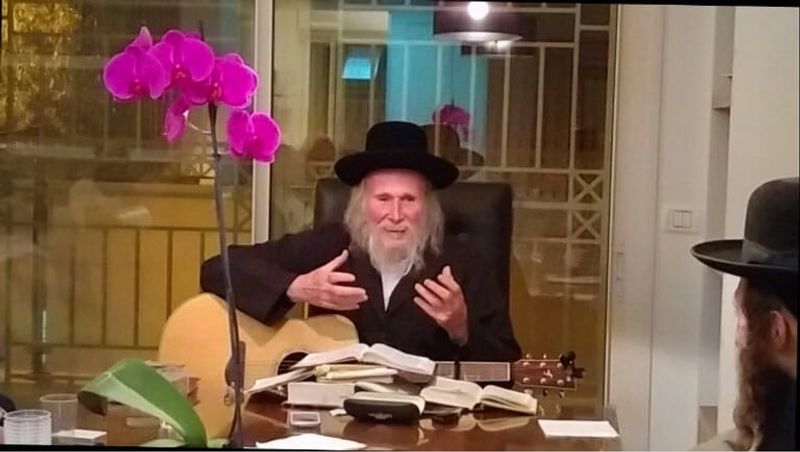
The First Shabbos with the Rav
So it was that they spoke was long hours. Then our Rebbe the Rav shlit”a turned to Rabbi Eliyahu and asked him if he could be his Shabbos guest. Rabbi Eliyahu, completely excited by the merit, agreed on spot, however, the Rav told him that first he had to call the Rabbanit, being that this would be the first Shabbos in ten years of marriage that the Rav would spend Shabbos without the Rabbanit. Therefore, he had to request her permission (the Rav emphasized that without her permission, he wouldn’t remain in Jerusalem). After permission from the Rabbanit, with our Rebbe the Rav elaborating on the virtue of the Jew which he just met, Rabbi Eliyahu’s friend brought our Rebbe the Rav on a motorcycle, and so they went shopping for Shabbos Kodesh. “The Rav arrived for Shabbos, and there was tremendously liveliness the entire Shabbos. 24 hours of dancing and singing, prayers and words of Torah without interruption at all.” This was a Shabbos of yearning and rising of the soul, which until this day is engraved in the heart of Rabbi Eliyahu. This Shabbos brought with it a unique connection for a long year, when sometimes our Rebbe the Rav would come to his house – and sometimes he would be escorted by more people, such as Rabbi Yehuda Leib Frank ztz”l, and Rabbi Yaakov Reicher shlit”a. Likewise, sometimes the Rav would be escorted by broken people, and the Rav would strengthen them mamash. Like today, also then our Rebbe the Rav could call people who needed strengthening, and he would mamash revive them. And sometimes, Rabbi Eliyahu would travel to the home of our Rebbe the Rav in Bnei Brak (then, the Yeshiva in Bnei Brak had not yet been established). We bring before you a portion of those words of chizuk which the Rav said to Rabbi Eliyahu. He reads to us from a very unusual letter which he sent to a friend on 30 Shevat 5730, around a month and a half after that fateful meeting. In it he describes to his friend the meeting and tells him about a special Jew who he knows, who is mamash like in the stories of the Baal Shem Tov… In Chanukah 5764 (2004 CE), Rabbi Eliyahu’s friend (to whose address he sent the above letter) arrived from America – he had been his colleague in Shlomo’s house in San Francisco. During that period, Rabbi Eliyahu lived in the Ramot neighborhood of Jerusalem. Rabbi Eliyahu suggested to his friend to come with him to Shabbos morning prayers by our Rebbe the Rav shlit”a. The friend responded that he would only come if rain didn’t fall (our Rebbe the Rav promised Rabbi Eliyahu that every time he would come on Shabbos on foot from Ramot to the Yeshiva, rain wouldn’t fall on his way, and so it was for many years. Once, Rabbi Eliyahu went out, and this time rain was falling. Rabbi Eliyahu waited and waited, but to his wonder the rain didn’t stop. Seeing this, he went on his way with the rain. Only when he reached the Yeshiva did he understand the reason for the rain. Our Rebbe the Rav shlit”a didn’t reach the Yeshiva that Shabbos…) In the morning, rain fell, and when Rabbi Eliyahu came to wake his friend up, the rain had already stopped, but the friend was concerned that the rain would catch him again on his way and he didn’t want to go out. “I went out alone, and in the prayer suddenly the Rav stopped next to me. I told the Rav about the friend and the Rav invited us to come. In short, we arrived and sat with the Rav, but the Rav didn’t talk at all words of Torah. Instead, the Rav spoke about various subjects, about the northern lights on the north of planet Earth, and more. However, I saw that this is what brought him close. The Rav in his wisdom knew what he was capable of hearing. The friend was very happy because of this. When he returned to America, he sent me from America the letter which I had sent him then several decades earlier.” In those years Rabbi Eliyahu established in Kiryat Yovel a “House of Love and Prayer.” In this place Rabbi Eliyahu drew many people close to Judaism through the power of Rabbeinu. In the end, the place was totally burned down and ceased to exist. When the place was burned down Rabbi Eliyahu had no place to live, and a friend who had a house in Moshav Shefer gave him his apartment to use there. Being that transportation in the place was difficult, the friend also offered him a car, but Rabbi Eliyahu didn’t want to drive a car. “From the time I abandoned America, I don’t drive,“ Rabbi Eliyahu told him. In place of this, the friend brought him…a mule and cart. With them, he would go about. On one occasion, our Rebbe the Rav shlit”a arrived to visit Rabbi Eliyahu in the Moshav. He suddenly saw him on the mule…The Rav asked him if he could also lead the mule a little bit. Rabbi Eliyahu certainly agreed, and the Rav got onto the cart, and drove fast while standing for several minutes, which his peos fluttering in the wind…This was a breathtaking sight, which years after the event, Rabbi Eliyahu drew with its inspiration the painting “Behold, I’m sending to you.” “When I would come to the Rav in Bnei Brak, the Rav would walk with stacks of books. This wasn’t anything new. Already 47 years ago, our Rebbe the Rav shlit”a would walk to every place with a stack of books. We would walk sometimes to the bank or to gemachim (free loan funds), being that the Rav had a good name because he would always return [the money] on time. There were those who wouldn’t return it, and gemachim already wouldn’t agree to loan to them. Our Rebbe the Rav would take out on his name for them and set a condition with the gemach that if they didn’t return it, he would pay the debt. Something that, by the way, happened many times… In the home of the Rav, he would prepare for me dinner [on weekdays] which was very appetizing, and afterwards we would walk to the fields in Givat Shmuel. Then, there weren’t houses like there are today. Everything was fields of citrus fruits, and we would do hisbodedus there. Afterwards, we would go and immerse in the mikveh of Vizhnitz. “We would sing the Breslov melody for the liturgical poem ‘Adir Ayom v’Nora’ – we would sing a lot on the way to hisbodedus – a melody full of arousal which opens the heart.” Rabbi Eliyahu continues to reminisce and remember fondly with yearning those years of avodas Hashem, when one of the unique things was the morning prayer at the Breslov yeshiva. “We would go afterwards to the Breslov yeshiva. We would begin the prayers at around 5 o’clock in the morning. While only at 7 o’clock the prayer of the youths began in the yeshiva, when they were finishing, we were still on pesukey d’zimra! The Rav would only finish at 10 o’clock in the morning – five hours for the morning prayer on a weekday!! We would have to move from place to place in the yeshiva because they had already begun the prayer. Then we would move to dining room. But when they finished the prayer in the yeshiva, we still hadn’t finished and we would go upstairs. But afterwards, when the shiur of Rabbi Binyamin Zeev Cheshin ztz”l had already begun, we would move over to the study hall of Kotzk next to the yeshiva. “At the Bar Mitzvah of the grandson of Rabbi Yechiel Greenwald z”l, I was there, and our Rebbe the Rav shlit”a also came. Since we arrived at the beginning of the Bar Mitzvah, we stood behind the curtain and began to pray the evening prayer until virtually no one remained in the hall. I sang a little bit there, and our Rebbe the Rav shlit”a spoke at the Bar Mitzvah. “For a period of a year, I learned at the Diaspora Yeshiva, when during this period our Rebbe the Rav shlit”a taught there. Then I learned Gemara in much depth. I learned [how] to learn as is fitting.” Additionally, Rabbi Eliyahu merited to learn chevrusa with our Rebbe the Rav shlit”a over a course of two years – once a week, either on Thursday or Friday. “The Rav also then would learn in his way and style. While in the course of learning, he would open many books, opening every source mentioned in the commentaries or in the Gemara, and he would learn it in depth. If I didn’t understand something, our Rebbe the Rav shlit”a would thoroughly explain it to me in English.” There were such hours of delight and sweetness of the Torah when Rabbi Eliyahu would receive from our Rebbe the Rav the true and unique way of Breslov of combining phenomenal persistence in Torah in depth and wide proficiency together with sublime avodas Hashem – highlighting Chatzos (the midnight lamentation for the destruction of the Temple) and hisbodedus every night alongside persistency in Torah. Rabbi Eliyahu felt that he had finally received what he had sought, and this path gave him strength also during the days that he wasn’t next to our Rebbe the Rav, when he made his home in the settlement of “Migdal” over a period of six years. Also then our Rebbe the Rav would come to him sometimes for visits of encouragement, and of course, Rabbi Eliyahu would travel to our Rebbe the Rav shlit”a. During that period the Yeshiva was established in Bnei Brak, and “when they made dinner in the Yeshiva, I would come to play on the guitar along with Rabbi Moshe Shelgi who would play the violin, and Rabbi Moshe Tzenani would speak at dinner.” At a certain stage, Rabbi Eliyahu understood that the way of Shlomo wasn’t suited for his way, especially when our Rebbe the Rav shlit”a expressed this in a clear manner. One day Shlomo arrived in Israel, and Rabbi Eliyahu, as a follower of his, organized a meeting with our Rebbe the Rav shlit”a in the Dan Hotel in Tel Aviv, where Shlomo was staying. Rabbi Eliyahu didn’t know what they spoke about between them, since they spoke in private for around twenty minutes. However, as many years passed, our Rebbe the Rav shlit”a related to him a portion of their conversation. He [Shlomo] said that he was afraid that my group would clip their wings. He didn’t have an issue that there shouldn’t be Chareidim, but he feared that they would extinguish people’s fire. Even though our Rebbe the Rav shlit”a is mamash the opposite of Shlomo, but there are certain points in Breslov which Shlomo was mamash strong in them. He had good points.”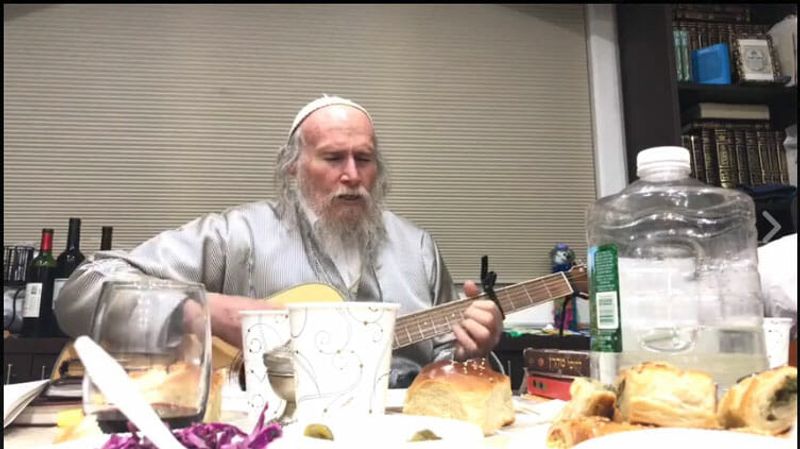
How did you start to play music?
“Shlomo brought me into the world of music, because he would play music a lot. This is something that brings great expression to the soul. But I mostly felt the light in the songs when we would sing in prayer by our Rebbe the Rav shlit”a, especially the morning zemiros. It’s hard to describe what melody the Rav gave to us, to the soul – the scent of the Garden of Eden. “For a long period the Rav would bring me up to Maftir [the last Torah reading of Shabbos, followed by a reading from the Prophets]. Really I was embarrassed to stand by the Rav, but I also enjoyed it very much, since after the Maftir no else goes up [to the Torah], and I would remain there a lot next to our Rebbe the Rav shlit”a (who would read from the Torah) and would stand by him all the time of the melodies of ‘Yakum Purkan’ and more. Simply the taste of the Garden of Eden. I felt what Rabbeinu says in Lesson 126 on the subject of ‘shabbas V’YiNaFaSh’ – ‘VaY avdah NeFeSh.’” Rabbi Eliyahu takes the guitar and begins to play with devotion “For what did the soul descend to the world? A descent for the sake of ascent the soul descended to the world” – in Hebrew and in English. “The Rav would sing with me in those times with feeling and yearning: The Rav sang this song with me for long hours in Hebrew and in English, while explaining in the midst of it, that descent is for the sake of an ascent that’s even greater than was at the beginning. The words of the Rav during those years are engraved in me, and what I speak [about] today, a lot of this [comes] from the words that I heard during those years.” “Many years I learned Kabbalah by Rabbi Yaakov Atiyah. He knew that I play the guitar, and at celebrations he would ask me to play. At one of his weddings an elderly kibbutznik participated, and when I sang the melody of ‘For what…’, he began to cry with great emotion. He approached me and asked from where I know this melody. I asked him, ‘From where do you know it?’ He answered me that when he was a small child in the Ukraine, when he would cry, his grandmother sang this melody to him. The words he didn’t remember, but the melody he did, and this greatly stirred him. A melody has awesome strength. “When I lived in Ramot, I would go out a lot to the grave of Samuel the Prophet, and the field and spring nearby. There the hidden Tzaddik Rabbi Yosef Dayan ztz”l would come. There our Rebbe the Rav shlit”a would sometimes arrive with Breslovers.”“Who will give me a wing like a dove” – The First Trip
In the first attempted trip of our Rebbe the Rav shlit”a to the grave of Rabbeinu HaKadosh in Uman, the Rav used the American passport of Rabbi Eliyahu, because of the great resemblance between them. Our Rebbe the Rav arrived with the passport of Rabbi Eliyahu at the American consulate, only he didn’t receive a visa. Rabbi Eliyahu points out that already at the beginning of their meeting the two of them discussed traveling to Uman. For many years Rabbi Eliyahu longed for the grave of Rabbeinu, but the various attempts which he made didn’t work out. Only in the year 5746 [around 1986 CE], in the trip with our Rebbe the Rav shlit”a, did he succeed in reaching Uman. Our Rebbe the Rav himself didn’t make it to the grave, since the Russians had suspicions about his passport and sent him back to Moscow, but Rabbi Eliyahu merited to reach there. “This was on the last day of Chanukah. We left Israel [with] 58 people. In Moscow they already removed 8 people, amongst them our Rebbe the Rav shlit”a. We landed in Vienna. At that time, the Neo-Nazis hid a bomb under the house of the Rabbi of Vienna, in whose house our Rebbe the Rav shlit”a was staying as a guest. However, in God’s kindness, outside of the hole which was torn open in the house, nothing happened. “We arrived in Kiev. There we requested a visa to Uman, but they didn’t give it to us. I was mamash in grief because of this, and my 12-year-old son who accompanied me on the trip said to me: Aba, why are you sad? Begin to play... I didn’t have a guitar, but I obtained a guitar from one of those present and began to play. Only a few minutes passed, and the visa was already in our hands… “The entire way to the grave, everything was white and all the way we were in a state of yearning. When I arrived at the grave, the cold was minus 30 degrees! But I didn’t feel anything! I clung to the grave and didn’t want to leave. I felt like in my childhood when my mother would scream at me to wear a jacket, and I don’t understand what she wants from me – I want to play in the snow. So it was also here. I didn’t feel anything of the cold so great was the yearning.” Also in years after this, he merited to participate in various trips, until Baruch Hashem the way was opened in 5749 (1988 CE). As is known, in that year the Russians only authorized 250 people to participate in the gathering then, and there was an argument between people about this. Our Rebbe the Rav shlit”a was greatly pained by this, and expressed this very adamantly. At the time, our Rebbe the Rav shlit”a said that we need to be careful not to make a flag without a boat – that is, that there are people who are only interested in showing off that they were in Uman, but all the advice of Rabbeinu they leave behind… “We left Israel in the direction of Cyprus, and behold the obstacles began. There was a malfunction in the airplane. We said the Tikkun Clalli and then they fixed the malfunction. When we arrived in Kiev, they gave us small booths instead of the hotel close to Kiev. Suddenly, the Russians announced that there isn’t a place in Uman for more than fifty people. Panic began between the people who weren’t students of the Rav, that they wanted to reach [Uman] and they came with complaints to our Rebbe the Rav shlit”a that they don’t accept [this]. We made many hours of dancing, but the Russians didn’t change their stance. “In the middle of the night, I think to myself that we’re going to get to Uman (the Russians agreed that we should reach Uman before Rosh Hashanah, but for Rosh Hashanah only authorized fifty people), and we don’t have a mikveh. In the middle of me thinking this, I suddenly see our Rebbe the Rav shlit”a next to me. He turns to me with a question: Do you want a mikveh?... So we went out on our way, while saying on the way the morning zemiros which I’ll never forget my entire life. What melody, what vitality!! On the way, various people see the Rav and began to harass him about Rosh Hashanah. I thought to myself: Just join us in morning zemiros, and we’ll sweeten all judgments and everyone will make it… “We arrived at the river and see Rabbi Michel Dorfman z”l come out of the water. We immersed and returned. When we arrived at the place that we slept, people asked the Rav where there’s a mikveh. Instead of [giving] directions to the river, our Rebbe the Rav shlit”a escorted them the entire way back. “The time of the trips to Uman were sometimes a close-up on the awe-inspiring conduct of our Rebbe the Rav shlit”a, who would take advantage of every second – prayer with self-sacrifice mamash. It’s difficult to describe. Our Rebbe the Rav shlit”a was total vitality when we first merited to reach the grave on Erev Shabbos, even though he wasn’t supposed to be In Rosh Hashanah in Uman, rather in Venice. He said, ‘A minute at the holy grave…there will be a day when so many people will come to Uman that already at the entrance to the city of Uman they will do prostrations…’ “In the end, they made a lottery for who will travel to Uman and who won’t, while several places were reserved in advance for Breslov elders. Our Rebbe the Rav shlit”a, who organized the entire trip, relented from the beginning even from participation in the lottery. However, in the end, in the merit of our Rebbe the Rav shlit”a, all the travelers merited to be in Uman for Rosh Hashanah. In the third Shabbos meal in Venice (on the Shabbos before Rosh Hashanah, with Rosh Hashanah beginning on Sunday night), the Rav instructed everyone to arrive in Uman with their luggage and to stay there for 48 hours, no matter what they do to us. However, in the Motzei Shabbos meal, the Rav said that he has another plan, which is that everyone should go to the hotel and enter there however it will be, and in the end everyone will stay. And that’s how it really was in the end. “After the trip, our Rebbe the Rav shlit”a said over the course of the entire year, ‘The entire Rosh Hashanah was in the merit of Rabbi Michel Dorfman.’ Since Rabbi Michel went on Shabbos to the grave of Rabbeinu and cried there for two hours at the holy grave that everyone would merit to make it to Uman for Rosh Hashanah, the Rav shlit”a credited everything to his merit. “Our Rebbe the Rav shlit”a said that someone who tries and makes every strategy to make it to Uman [even if he doesn’t succeed], he receives [credit] as if he was in Uman, only without arrogance…” Rabbi Eliyahu raises memories from various occasions which he experienced with our Rebbe the Rav. “By our Rebbe the Rav we saw Divine inspiration in a simple way that’s unquestionable – that he knows our thoughts exactly. Not everything is possible to tell about, and also what is [possible] would require [us] to sit until the morning and we still wouldn’t finish. “This was at the dedication of the Torah scroll for the soul of the martyr Rabbi Eliyahu Amadi HY”D. The Rav was very serious. When we reached the street, the Rav began to say Kaddish in the special melody for Kaddish, and all of this was while opposite [us] the Arabs were throwing at us a shower of rocks, but the Rav was in his own. In the greatest calm, the Rav said the Kaddish, and only when he finished did he go up in the direction of the Yeshiva.”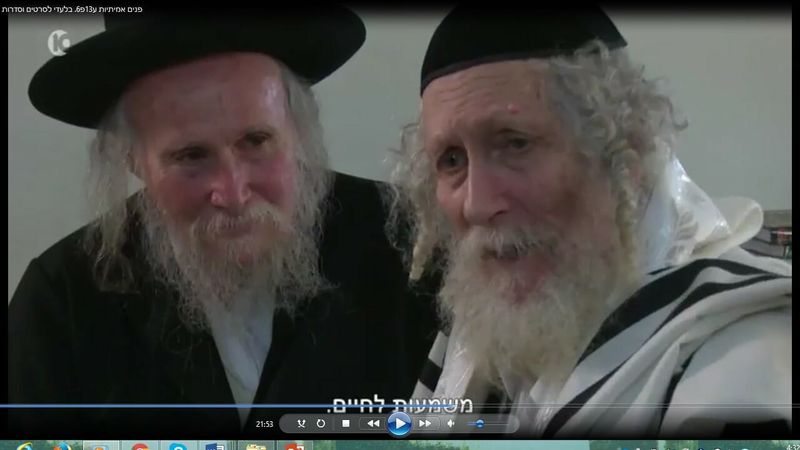
Subscribe to Our Newsletter
Receive Torah articles and inspiration directly in your inbox