Parshas Mishpatim by Harav Eliezer Berland Shlit"a
Parshas Mishpatim By Rabbi Eliezer Berland Shlit"a [http://www.docstoc.com/docs/173476947/Parshas%20Mishpatim%20By%20Rabbi%20Eliezer%20Berland%20Shlit%22a]
Tzama Nafshi in English - Parshas Mishpatimפרשת משפטים
Transcribed and translated from previous recordings of
HaRav Eliezer Berland Shlit”a
“Six days you should accomplish your activities and on the seventh day you shall desist” (23:12)
A child that sees his father sitting calmly, singing and speaking words of Torah at the Shabbos table will feel a profound sense of inner happiness and serenity…
“Rabbeinu says that Shabbos is like a magnificent wedding at which everyone is happy and dancing with tremendous joy. A person gets dressed up in his finest clothing and quickly runs to take part in this joyous celebration. But [he doesn’t realize] what an incredible privilege it is even just to be able to stand outside and peek through a curtain, through the tiniest crack and to be able to watch what is going on inside” (Sichos HaRan 254).
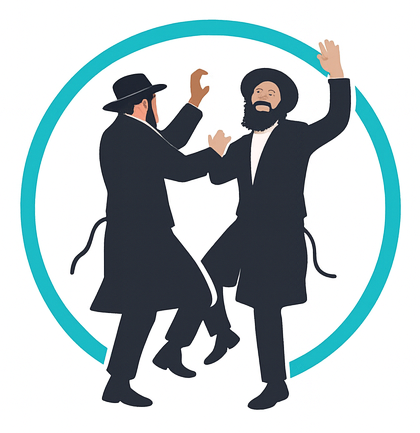
When Shabbos arrives, there is a wedding in heaven. It is 26 hours long, from the beginning of kabbalas Shabbos until Havdalah, and one must participate in this wedding, with the songs and dancing that are taking place in heaven. When we recite Lecha Dodi at the beginning of Shabbos, HaKadosh Baruch Hu immediately enters Gan Eden and dances with the tzaddikim. All Shabbos long, c’viyachol, Hashem dances with the tzaddikim, with all the angels in Gan Eden, and everyone dances around HaKadosh Baruch Hu and says “This is Hashem to whom we hoped; let us exult and be glad in His salvation” (Yeshiah 25:9). And everyone will look at Hashem face to face, and everyone will be nourished from the clarity of the bright shining light (from the clear lens - אספקלריא המאירה). Everything that we have on Shabbos, the whole joy of Shabbos, is drawn from the joy of the dancing and music of HaKadosh Baruch Hu with the tzaddikim in Gan Eden. The simchah in heaven filters down to our world.
The Rebbe said that Shabbos is literally like a wedding—a unique wedding. It’s a grand and important wedding where everyone comes and dances. But the problem is that not everyone is able to get into the hall. The hall will not hold everyone. Just like the weddings of Admorim in which 30,000, 40,000, even 50,000 chassidim attend—some climb on the windows, some stand on the rooftops with binoculars watching the great joy of the chuppah or the dancing of the chassan. Everyone is looking for some kind of opening or crack to peer through—from some rooftop maybe they will be able to see some of the joy of the wedding. Maybe they’ll catch a glimpse of some of the dancing.
The Rebbe says that Shabbos is like a wedding, but who knows who will merit seeing the joy of Shabbos? Who will merit seeing the wondrous joy of Shabbos, the infinite joy of Shabbos? “…what an incredible privilege it is even just to be able to stand outside and peek through a curtain, through the tiniest crack and to be able to watch what is going on inside!” Because Shabbos is only for dancing, singing and joy. When Shabbos arrives a person should be happy, and he should dance and sing. The holy Shabbos is unending joy, limitless joy. It is forbidden for a person to have even a fleeting thought of sadness or worry on Shabbos. The essence of Judaism depends on this. The more a person is happy on Shabbos, the more he dances on Shabbos, this is what determines how much G-dly light he will merit during his week. The G-dly light enlightens a person through the joy that he has on Shabbos. A person is not allowed to be miserable and depressed on Shabbos. He shouldn’t worry—“as if he had completed absolutely everything that he had to do” (Rashi on Shemos 20:8). Baruch Hashem that no one is in jail. No one has been taken captive. Everyone has, Baruch Hashem, two challos and a cup of wine for Kiddush.
When a person says “Vayachulu” he is saying the ten ma’amaros. Vayachulu includes everything, all the accountings, all the worries, all the plans. When Shabbos Kodesh arrives, it is forbidden for a person to make any plans about what he might do during the coming week. He should have no thoughts about what will be during the week. When Shabbos arrives, let Hashem take care of everything. If a person thinks on Shabbos, “What will be?” then they say in heaven, “OK. Let it be like he thinks.” Why are you doing Hashem’s accounting? You are ruining all the plans of Hashem Yisborach. Hashem has infinite potential, an infinite ability to bestow good upon a person. He wants to give you everything. He wants to overwhelm you with good. Hashem wants to give a person all the bounty in the world. But if a person thinks on Shabbos, “What will we eat? What will we drink? What will we eat on Sunday? What will be on Monday? What will we eat on Tuesday?” Then they say to him, “OK. Whatever you think, that’s what we’ll give you. You will receive according to your own understanding.” But if you don’t think and you don’t ask “What will be? What will be on Sunday, on Monday…” but rather, fortify yourself with joy, then you will have such bounty, such salvation—things you never even hoped for. Things you never expected. Salvation you never even dreamt of. You cannot imagine what bounty Hashem has to give you. But you must rejoice on Shabbos Kodesh and to really, truly be filled with unlimited happiness, an unending and boundless joy. Of course, you shouldn’t lose control. But you can only draw the holiness of Shabbos and the G-dly light of Shabbos down through the vessel of joy.
Shabbos arrives. Everyone is singing. Everyone is dancing with their children. Everyone: Admorim, Rabbanim, Rashei Yeshivos. Everyone is sitting for three to four hours at the Shabbos table and singing with their children. And the children give over divrei Torah, chidushim. Children feel the oneg Shabbos, feel desire to be frum yidden, desire to be yireh shamayim. The Shabbos table is the opening to everything in the world, all the salvation. When a person sits with his children and sings with them, that is where the children get their desire for holiness from, their desire for Torah, for prayer and yiras shamayim, also their love for their mother and father. You don’t sing? Then your Shabbos is not Shabbos! If a person doesn’t sing the zemiros, then what will you do if your son goes of the derech, chas v’shalom? If a family doesn’t sing the Shabbos zemiros, then the kids start wandering around because they don’t have anything to do, and then they go outside and hear not nice things and they go and meet bad friends and they themselves then ruin other friends. The child sees that his father isn’t praying, isn’t happy. He doesn’t sing the Shabbos songs, and so the child goes and does aveiros. When Shabbos arrives, a child must see his father singing and yearning and delighting in Shabbos, and then he too will get a taste for Shabbos, a taste for life. Now is the time for zemiros, singing. We sing zemiros for an hour and then the children are enlivened. They laugh and are happy. If a child sings for an hour with his father on Shabbos, then in this merit he can hold out for the whole week. Then if he happens to meet a bad friend, he will say, “Get away from me. What? Do you want to destroy me?” If a child sees his father sitting peacefully, singing zemiros, he will have such a good feeling in his heart and he will be so secure that this is his life, this is his joy, and then he won’t be interested in the street and all its emptiness. What more does a child need than this? The minimum requirement of Judaism is to sing the Shabbos songs. Without this one hasn’t even begun!
They asked the father of Rebbe Duvid from Lelov how he merited to have such a great son. He said that when he would come to the line of the Shabbos zemiros that said “You should merit seeing your children and your children’s children fulfilling the Torah and mitzvos” he would sing it over and over with tears in his eyes, with such a deveikus, for at least half an hour, that he should merit to see his children and grandchildren going this way. A father wants that his child will not cut off his payos! Why shouldn’t he cut off his payos? What does he see his father doing? His father sleeps on Shabbos, eats and sleeps and eats and sleeps again... If he would see his father singing with a lot of enthusiasm and dancing with his children and getting them excited, then no child would cut off his paos, no child would look to the street, because even children want to serve Hashem. It’s just that they don’t see any avodas Hashem. So if a person will sing with deveikus, and sing, “I should merit seeing my children and children’s children” then he and his children and his grandchildren will go with payos, study Torah and do mitzvos.
To advertise, dedicate an issue, or to receive a blessing from the Rav please call:
(Israel)
(US) 917-284-1118
(UK) 44-238-228-0223
Subscribe to Our Newsletter
Receive Torah articles and inspiration directly in your inbox