
Shushan Purim with Rav Eliezer Berland Shlit”a
On the day of Shushan Purim, we merited to pray Shacharit, to hear the Megillah reading, and “Kiddush” Purim together with the Gaon and Tzaddik Moreinu HaRav Eliezer Berland shlit”a. Below is a review of the prayer of Shushan Purim:
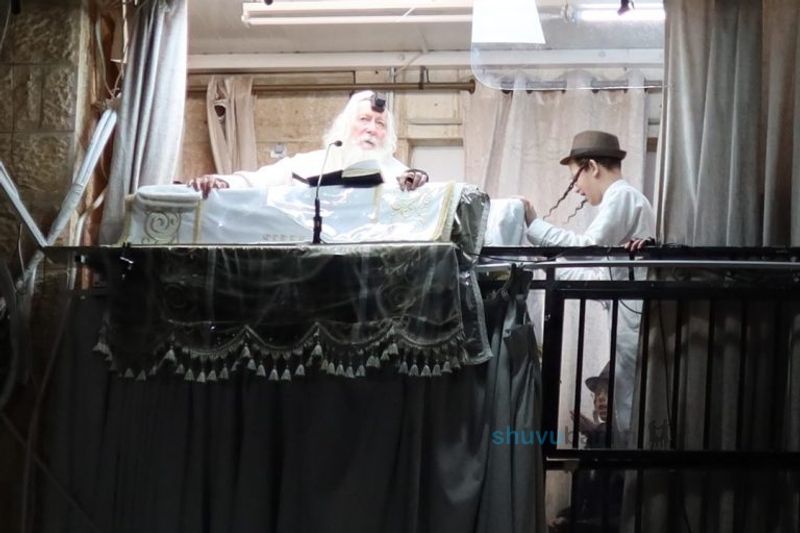
At 4:44 AM, the Rav shlit”a came out to pray Shacharit of Purim day. The Rav shlit”a together with the entire congregation begin with “Hareini Mitkasher...” and “Leshem Yichud...” word-by-word. While crowned with Tallit and Tefillin, the Rav shlit”a began saying the passages of Tikkun Leah which are said on days in which Tachanun isn’t said, such as Purim day, and afterwards, he continued with the Morning Zemirot. “Ba’ron Yachad Kochavei Boker” to the light of the clear, blue heavens, and the chirping of birds – ahhh, the Garden of Eden on earth. The prayer continued with Niggunim, Korbanot, and Pesukei D’Zimra, all with vitality and pleasantness, uniquely on this Purim, as we wrote earlier, with the Rav shlit”a saying all the prayers slowly, word-for-word, with such pleasantness, with yearning and longing, the model of making the maximum of Purim day in the aspect of “Kippurim,” for prayers and supplications. In the middle of Pesukei D’Zimra, while singing “Lamnatzeach Binginot Mizmor Shir,” the rejoicing became stronger with the Rav shlit”a, despite his age and medical state, jumping and jumping and clapping with greater strength, vitality and phenomenal joy. There is no way to transmit in writing the joy that there was during this song, which continued for more than a quarter-hour. Afterwards, “Baruch She’amar” at exactly 6:00, and praying the Amidah about half-hour later, at 6:30. After the Amidah, the Rav shlit”a left for a time-out, in which he once again went to immerse in a mikveh before putting on Tefillin of Rabbeinu Tam. After around twenty minutes, he returned for the repetition of the Amidah. Afterwards, the Rav shlit”a began the reading of the Torah for Purim day, “Vayavo Amalek...” with three aliyot. After the Torah reading, the Rav shlit”a said that each person should intend fulfill their obligations of the day, which are: the Megillah reading, Mishloach Manot (gifts for one’s friends), and Matnot L’Evyonim (gifts for the poor) which are thirty shekels for each poor person, and the Purim feast. He himself added rejoicing on Purim as a mitzvah of the day in and of itself. The reading of the Megillah on Purim morning, like every year, takes less time than that of Purim night, lasting around a half-hour. It’s worth noting that during the reading of the Megillah, tears flowed from the pure eyes of the Rav shlit”a, especially during the verse, “And Mordechai knew everything that had taken place...,” and also in the verse, “And when the turn of Esther bat Avichail, Mordechai’s uncle, arrived...” At the end of the Megillah reading, “Shoshanat Yaakov” was sung for a number of minutes. During the song, with awesome joy, the Rav didn’t hesitate to fulfill the mitzvot of the day, Mishloach Manot and Matnot L’Evyonim, in the presence of all. After the song, the Rav shlit”a finished the order of prayers, which took about ten minutes. In particular, the Rav sang, “May He open our hearts to His Torah,” after many months in which we didn’t merit to sing it together with him. After the prayer, the Rav shlit”a, like every year, held “Kiddush” of Purim. He began with the words, “Va’ychulu HaShamayim V’HaAretz...” and continued with words of humor. After finishing a shiur, the Rav shlit”a began with singing and dancing as part of rejoicing on Purim, with the songs of Rabbeinu Nachman, according to the order of the Maariv prayer. As we mentioned, the Rav was with awesome vitality and joy, jumping and clapping, and also making many moves with joy and great fervor! After many long minutes of singing and dancing, the Rav shlit”a said Kaddish, and at 8:20, after some three hours and twenty minutes, he finished Shacharit.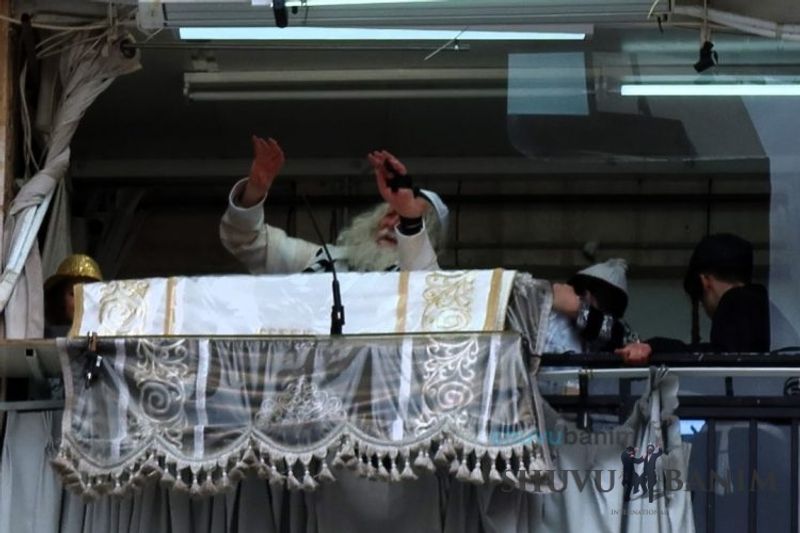
Subscribe to Our Newsletter
Receive Torah articles and inspiration directly in your inbox