The Story of the Master of Prayer – Hitchadshut Magazine Tevet 5781
At a time when the holy prayers of our Rav, Rabbi Berland, are being adopted all over Israel and the entire world, opening more and more hearts, Hischadshut goes back to their starting point.
--The shiur in Sippurey Ma’asios which brought the opening shot
--The prayer for the lunar eclipse – the first prayer
--The prayers for individuals which have already been gathered into a compendium of over 27 volumes!
--The spiritual and material Yeshuos (salvations) in the merit of the prayers
“And I am prayer”
 Shabbos morning. He’s gathered under his blanket. Even though he’s awake already, his heart is still sleeping. A depressing week went by and the memories are not so great. Thrown out of class twice, also at home the situation isn’t optimistic to put it mildly. He’s already on the slippery path of descent and doesn’t find a reason to arouse himself from the bed. And then a spark is lit in his eye…last week he received a “prayer” from the Rav. This was in the peak of prayers, when they chanted, “zara chaya v'kayoma." Maybe, he’ll also receive one today!?
This is enough for him to get up, get organized, and to march the entire way to the “Yeshiva” in the Old City. He’s pressed between people and makes a way for himself to the prayer column. In the synagogue, they’re already at “Nishmas.” In a little bit they begin the dancing with the tune that’s before “Yishtabach,” and, behold, he manages to stand next to the Rav. The Rav gazes at him, smiles at him, and then brings him also this week a folded yellow paper…”a prayer”…
Several years later, he’s already a father of children. Maybe he’s not a Kollel student, but he’s certainly a Kosher Jew who is careful with “a small mitzvah as he is with a big mitzvah” and acknowledges that this is all in the merit of the Rav’s warmth and way of relating to him. Those prayers which the Rav wrote especially for him every week – prayers, which outside of their content, they held within them endless love and radiated warmth which gave him the strength to overcome all the turbulence, and in their merit he is what he is today.
Shabbos morning. He’s gathered under his blanket. Even though he’s awake already, his heart is still sleeping. A depressing week went by and the memories are not so great. Thrown out of class twice, also at home the situation isn’t optimistic to put it mildly. He’s already on the slippery path of descent and doesn’t find a reason to arouse himself from the bed. And then a spark is lit in his eye…last week he received a “prayer” from the Rav. This was in the peak of prayers, when they chanted, “zara chaya v'kayoma." Maybe, he’ll also receive one today!?
This is enough for him to get up, get organized, and to march the entire way to the “Yeshiva” in the Old City. He’s pressed between people and makes a way for himself to the prayer column. In the synagogue, they’re already at “Nishmas.” In a little bit they begin the dancing with the tune that’s before “Yishtabach,” and, behold, he manages to stand next to the Rav. The Rav gazes at him, smiles at him, and then brings him also this week a folded yellow paper…”a prayer”…
Several years later, he’s already a father of children. Maybe he’s not a Kollel student, but he’s certainly a Kosher Jew who is careful with “a small mitzvah as he is with a big mitzvah” and acknowledges that this is all in the merit of the Rav’s warmth and way of relating to him. Those prayers which the Rav wrote especially for him every week – prayers, which outside of their content, they held within them endless love and radiated warmth which gave him the strength to overcome all the turbulence, and in their merit he is what he is today.
 “My fire will burn until the coming of Mashiach,” said Rabbeinu Nachman. He gazed and saw until the end of all generations – our dark generation, and carved pathways for each and every person, in every time and place, to truly come close to Hashem, and to truly be a kosher person.
And here the son asks: How in a dark and lowly generation such as ours can a person connect with this holy path, when “the wicked are walking all around,” and the evils of our times threaten us in a way that’s unsurpassed?! Who is it that reveals the pathways which come out of the “flowing stream [Rebbe Nachman]” and which can satiate each person?!
This is only the true Talmid of the generation, the Tzaddik of the generation who nullified himself completely to the will of Rabbeinu HaKadosh, to fulfill his counsel and to bequeath it to everyone and to each individual personally. Our Rebbe, the Rav shlit”a, from the time he drew close to Breslov has nullified his entire being and individuality in order to draw water from and to satiate from the Torah of the “flowing stream, source of wisdom.” This awesome Tzaddik whose “head reaches the heavens” and who “no secret escapes him,” is also in the category of a “ladder standing on the ground.” He knows how to go according to the spirit of each and every person.
The Rav knows how to descend to us, to understand us and our trials, difficulties, setbacks, and rites of passage. And the path, the holy path of Breslov, he extends to us in a rope of salvation through those prayers which bind heaven and earth, descent and ascent, screaming and gratitude. And there’s no matter, time or subject which doesn’t have a prayer for it, as our Sages have already taught us, “Hashem doesn’t come as a tyrant with His creatures.” If we exist in this generation, we won’t be yelled at because we’re found in such darkness and confusion as this -- rather, why aren’t we praying? Why aren’t we requesting and supplicating? Because our prayers, screams and turning to Hashem are longed for in Heaven. This is what’s expected of us – to pray to merit to be persistent in learning Torah, to guard our eyes, to be saved from the evils of our times, to distance oneself from controversy.
This and more than this we have in plenty, and in a language which opens the heart in these awesome prayers from our Rebbe, the Rav shlit”a. And through those prayers we receive a perspective, a way of life, and a correct way of looking at everything that happens to us. One of the Rav’s greatest talmidim, a very influential Rabbi in Breslov, Rav Meir Malka defined this well: “The Rav is the father of this generation. He wrote for us and put in our mouths the screaming out of our generation – the confessions, longings, lowliness and humility which all the prayers contain – only someone who lives this and is found amongst this can write this” (from Lehavot Esh).
“My fire will burn until the coming of Mashiach,” said Rabbeinu Nachman. He gazed and saw until the end of all generations – our dark generation, and carved pathways for each and every person, in every time and place, to truly come close to Hashem, and to truly be a kosher person.
And here the son asks: How in a dark and lowly generation such as ours can a person connect with this holy path, when “the wicked are walking all around,” and the evils of our times threaten us in a way that’s unsurpassed?! Who is it that reveals the pathways which come out of the “flowing stream [Rebbe Nachman]” and which can satiate each person?!
This is only the true Talmid of the generation, the Tzaddik of the generation who nullified himself completely to the will of Rabbeinu HaKadosh, to fulfill his counsel and to bequeath it to everyone and to each individual personally. Our Rebbe, the Rav shlit”a, from the time he drew close to Breslov has nullified his entire being and individuality in order to draw water from and to satiate from the Torah of the “flowing stream, source of wisdom.” This awesome Tzaddik whose “head reaches the heavens” and who “no secret escapes him,” is also in the category of a “ladder standing on the ground.” He knows how to go according to the spirit of each and every person.
The Rav knows how to descend to us, to understand us and our trials, difficulties, setbacks, and rites of passage. And the path, the holy path of Breslov, he extends to us in a rope of salvation through those prayers which bind heaven and earth, descent and ascent, screaming and gratitude. And there’s no matter, time or subject which doesn’t have a prayer for it, as our Sages have already taught us, “Hashem doesn’t come as a tyrant with His creatures.” If we exist in this generation, we won’t be yelled at because we’re found in such darkness and confusion as this -- rather, why aren’t we praying? Why aren’t we requesting and supplicating? Because our prayers, screams and turning to Hashem are longed for in Heaven. This is what’s expected of us – to pray to merit to be persistent in learning Torah, to guard our eyes, to be saved from the evils of our times, to distance oneself from controversy.
This and more than this we have in plenty, and in a language which opens the heart in these awesome prayers from our Rebbe, the Rav shlit”a. And through those prayers we receive a perspective, a way of life, and a correct way of looking at everything that happens to us. One of the Rav’s greatest talmidim, a very influential Rabbi in Breslov, Rav Meir Malka defined this well: “The Rav is the father of this generation. He wrote for us and put in our mouths the screaming out of our generation – the confessions, longings, lowliness and humility which all the prayers contain – only someone who lives this and is found amongst this can write this” (from Lehavot Esh).
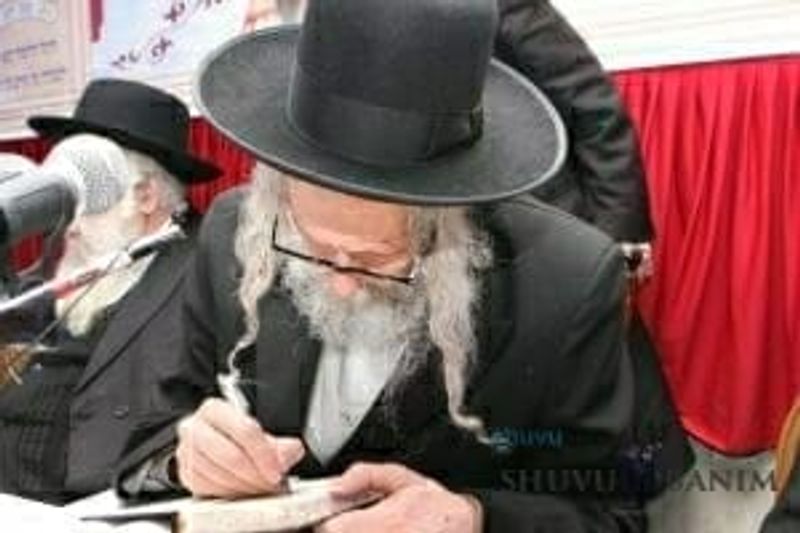 “Rav, I want a prayer” – Who doesn’t recognize that line? The yellow pages with the legendary handwriting – black fire on white fire, numerical values scribbled all over the page, fiery prayers.
As of today, these unique prayers have gone out all over the world -- tens of volumes containing prayers for every matter and subject. Needless to say, there’s also the “Tefilah L’Ani” series of prayers on Jewish Holy Days -- already for many years, it’s possible to see the followers of the Tzaddik flipping through these pages at every available moment before the coming of the Holy Day.
We already don’t know a different reality, but veterans of the Yeshiva remember how everything began. Rabbi Moshe Shaul shlit”a, one of the old-time students of the Rav shlit”a, whose wife merited to type out the first prayers, brings us back three decades ago:
“This began when on one Shabbos, the Rav shlit”a spoke with fiery excitement about Sippurey Ma’asios [Rabbi Nachman’s Stories], about the ‘Master of Prayer’ and his followers who would live outside of a settled area, and would accomplish everything only through prayer. The Rav concluded the shiur with these words, ‘A person needs to pray his entire life that he should be one of the followers of the Master of Prayer’ (as in related in Story #12, called the ‘Master of Prayer’). The shiur made a strong impression on me. After the shiur I did hisbodedus and prayed that I should also merit to be amongst the followers of the Master of Prayer.
“The following day, Sunday night, there was a lunar eclipse, and the Rav wrote a prayer about this. This was the first prayer which the Rav publicized, a prayer about the lunar eclipse. They handed it out to everyone in the Yeshiva, and afterwards we hired a bus and all of us travelled to Kever Shmuel HaNavi at midnight. We did hisbodedus, and then afterwards we all said the prayer [on the lunar eclipse] together. There was a great spiritual light there. At the beginning the Rav only put out prayers for the masses. Only after several years did he begin to write personal prayers as well. At that time, the Rav shlit”a also began to write prayers about the Jewish Holy Days, and my wife, who previously had already typed out the shiurs of the Rabbanit tlit”a, began also to type out the prayers of the Rav. The first Holiday that we merited to a prayer was Chanukah. Then it was printed on large A4 paper, with a yellow binding. The prayers weren’t yet divided up according to letters, nor were they yet vowelized, and understandably without all the additions that there are today.”
The prayers were not yet known by the series title “Tefilah L’Ani,” rather “Prayer for Chanukah,” “Prayer for Purim,” etc. -- and so too for each Holy Day. The prayers were received by our people with awesome enthusiasm. Suddenly, we saw the Holidays with real light which reaches each and every person, to his personal Avodas Hashem and his spiritual situation. The fire kindled in the prayers lit up hearts and gave to each individual an illuminating window and perspective on the essence of the Holy Day he found himself in. At the beginning, they still didn’t know the scope of the Torah found within the prayers and how they are layered within from the entire Torah mamash – from Tanach, Gemara, Midrash, the holy Zohar, Poskim, Musar, books of Chasidus in general and the books of Rebbe Nachman in particular. Only after years passed, when the series “Tefilah L’Ani” was released anew with an addition of source references and comments – only then did it give us a tiny opening to see a little bit of the incomprehensible scope and knowledge which these holy prayers contain. Regarding this we’ll speak at length below.
Rabbi Moshe Levinson shlit”a relates that he once heard the Rav shlit”a say regarding the prayers which he wrote for the Holidays: “I hung my body on a tree, and therefore, I wrote these prayers only with my Neshama [higher soul]. Only in this way is it possible to write these prayers…”
“Rav, I want a prayer” – Who doesn’t recognize that line? The yellow pages with the legendary handwriting – black fire on white fire, numerical values scribbled all over the page, fiery prayers.
As of today, these unique prayers have gone out all over the world -- tens of volumes containing prayers for every matter and subject. Needless to say, there’s also the “Tefilah L’Ani” series of prayers on Jewish Holy Days -- already for many years, it’s possible to see the followers of the Tzaddik flipping through these pages at every available moment before the coming of the Holy Day.
We already don’t know a different reality, but veterans of the Yeshiva remember how everything began. Rabbi Moshe Shaul shlit”a, one of the old-time students of the Rav shlit”a, whose wife merited to type out the first prayers, brings us back three decades ago:
“This began when on one Shabbos, the Rav shlit”a spoke with fiery excitement about Sippurey Ma’asios [Rabbi Nachman’s Stories], about the ‘Master of Prayer’ and his followers who would live outside of a settled area, and would accomplish everything only through prayer. The Rav concluded the shiur with these words, ‘A person needs to pray his entire life that he should be one of the followers of the Master of Prayer’ (as in related in Story #12, called the ‘Master of Prayer’). The shiur made a strong impression on me. After the shiur I did hisbodedus and prayed that I should also merit to be amongst the followers of the Master of Prayer.
“The following day, Sunday night, there was a lunar eclipse, and the Rav wrote a prayer about this. This was the first prayer which the Rav publicized, a prayer about the lunar eclipse. They handed it out to everyone in the Yeshiva, and afterwards we hired a bus and all of us travelled to Kever Shmuel HaNavi at midnight. We did hisbodedus, and then afterwards we all said the prayer [on the lunar eclipse] together. There was a great spiritual light there. At the beginning the Rav only put out prayers for the masses. Only after several years did he begin to write personal prayers as well. At that time, the Rav shlit”a also began to write prayers about the Jewish Holy Days, and my wife, who previously had already typed out the shiurs of the Rabbanit tlit”a, began also to type out the prayers of the Rav. The first Holiday that we merited to a prayer was Chanukah. Then it was printed on large A4 paper, with a yellow binding. The prayers weren’t yet divided up according to letters, nor were they yet vowelized, and understandably without all the additions that there are today.”
The prayers were not yet known by the series title “Tefilah L’Ani,” rather “Prayer for Chanukah,” “Prayer for Purim,” etc. -- and so too for each Holy Day. The prayers were received by our people with awesome enthusiasm. Suddenly, we saw the Holidays with real light which reaches each and every person, to his personal Avodas Hashem and his spiritual situation. The fire kindled in the prayers lit up hearts and gave to each individual an illuminating window and perspective on the essence of the Holy Day he found himself in. At the beginning, they still didn’t know the scope of the Torah found within the prayers and how they are layered within from the entire Torah mamash – from Tanach, Gemara, Midrash, the holy Zohar, Poskim, Musar, books of Chasidus in general and the books of Rebbe Nachman in particular. Only after years passed, when the series “Tefilah L’Ani” was released anew with an addition of source references and comments – only then did it give us a tiny opening to see a little bit of the incomprehensible scope and knowledge which these holy prayers contain. Regarding this we’ll speak at length below.
Rabbi Moshe Levinson shlit”a relates that he once heard the Rav shlit”a say regarding the prayers which he wrote for the Holidays: “I hung my body on a tree, and therefore, I wrote these prayers only with my Neshama [higher soul]. Only in this way is it possible to write these prayers…”
The Awesome Series – “Tefilah L’Ani”
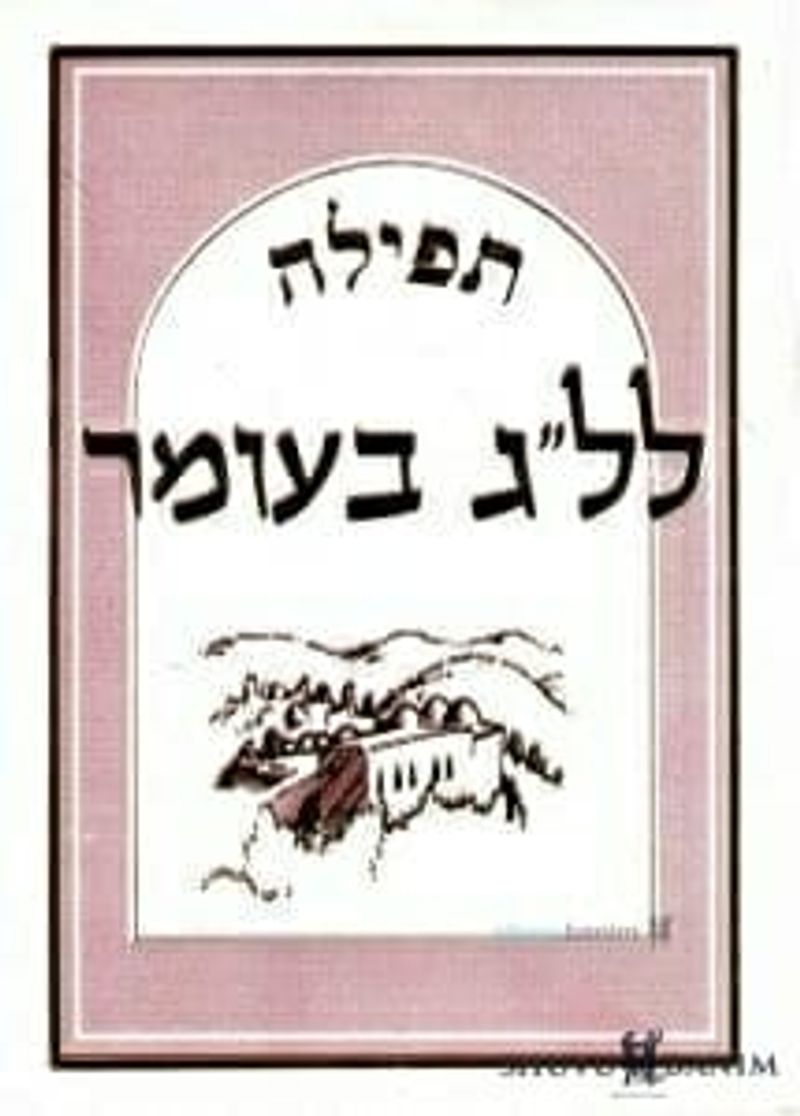 On the side of the distribution of the prayers for individuals, there were those who took onto themselves to beautify the prayers for the Holidays. They typed the prayers out from scratch, vowelized them, divided them into sections, and published them covered in a high-quality binding. Afterwards, the “Har Tzion” institute was founded which worked on the publication of the Rav’s prayers, and they put an emphasis on the addition of source references and comments on the prayers. “The investment and effort were very great,” relates Rabbi Nosson Galinski (R' Yankele's grandson), who was one of the extensive staff which took onto themselves the holy work. “The Rav wrote the prayers without books or source references, rather from his phenomenal mind, but we saw awesome Divine providence.”
“Many of the important people in Breslov were stirred by the unique comprehensiveness and the strength-giving content. Also my father, Rabbi Nachman Galinski z”l once said to me several sources for the ‘Tefilah L’Ani’ of Purim. During that period, there weren’t the digital Torah databases that there are today, with which it’s possible in a short time and relatively easily to get to all the source references. Therefore, it demanded from us special devotion to the matter. Over the course [of time], even more investment was added, and then the prayers in the series of books known to all -- ‘Tefilah L’Ani’ -- was published in the beautiful brown binding. More source references were already added there, and other important sections, for example, ‘the torah of the tefilla’ – a section in which is found practically-speaking awesome matters about the essence of the Holiday which come from amidst the prayer -- and also according to subjects in Avodas Hashem. There were also in them prayers which the Rav added over the course of years with several important additions, as in the prayer for Purim.
“So we merited to the prayers about Pesach, in which are described some of the levels of this holy and awesome night, and about the history of the world from the holy Avos and onwards, when they tried to draw this holy illumination. On Lag B’Omer – to say on the grave of Rabbi Shimon bar Yochai in Meron, and in [the prayer] is revealed a little of the glory of the soul of our master Bar Yochai. On the Chag of the giving of the Torah [Shavuos], in which the Rav shlit”a opens for us the heavens and brings down the Torah in thunder and lightning. Also it reveals to the person who says the prayer the entire Avodah of the great people of the generations -- the occasion when they wanted to draw down the mystery of the Two Tablets, from Rivka with Yaakov, by way of Leah, and the drawing down of the soul of Mashiach by Ruth and Boaz.
“So we merited to a series of awesome prayers about Chanukah, when the illumination of the Menorah which Zechariah HaNavi saw is revealed, ‘I saw and behold a golden Menorah with its bowl on its top…’; prayers for the New Year from the beginning on Tu B’Shevat, and in it are awesome prayers for Shabbat Shirah which is close to it. In it, the Rav shows us how the entire creation sings to its creator. The prayer for Purim about Hashem’s war with Amalek in each generation through Moshe and Yehoshua.
“An interesting unpublicized fact is that the Rav shlit”a didn’t write prayers about the ‘High Holidays’. Once the Rav shlit”a spoke about this, saying that if he wanted to write about the Holidays of Tishrei, he would have to close himself in a room for a course of two weeks! Without leaving the room.
“In this series, there is also the volume ‘Prayer at the Grave of Rabbeinu HaKadosh [Rebbe Nachman].’ There were these prayers which the Rav shlit”a wrote over the course of several years. Then people came and gathered them together and requested from the Rav more prayers to say at the holy grave. In this way we merited to this awesome prayer, which anyone who says it at the holy grave, his heart simply opens up with awesome arousal – a prayer which gives a ‘feeling’ of a little of the greatness of the soul of Rabbeinu HaKadosh. Also added to this series was the volume, ‘Chalaka – Chinuch Banim [Upsherin & Children’s Education]’ about beginning the child at Talmud Torah and about his education – from the books of the Ari HaKadosh and the prayers of Rabbi Nosson, and the prayers of our Rebbe, the Rav shlit”a.” (You can purchase the Tfilla L'ani series on this website.)
On the side of the distribution of the prayers for individuals, there were those who took onto themselves to beautify the prayers for the Holidays. They typed the prayers out from scratch, vowelized them, divided them into sections, and published them covered in a high-quality binding. Afterwards, the “Har Tzion” institute was founded which worked on the publication of the Rav’s prayers, and they put an emphasis on the addition of source references and comments on the prayers. “The investment and effort were very great,” relates Rabbi Nosson Galinski (R' Yankele's grandson), who was one of the extensive staff which took onto themselves the holy work. “The Rav wrote the prayers without books or source references, rather from his phenomenal mind, but we saw awesome Divine providence.”
“Many of the important people in Breslov were stirred by the unique comprehensiveness and the strength-giving content. Also my father, Rabbi Nachman Galinski z”l once said to me several sources for the ‘Tefilah L’Ani’ of Purim. During that period, there weren’t the digital Torah databases that there are today, with which it’s possible in a short time and relatively easily to get to all the source references. Therefore, it demanded from us special devotion to the matter. Over the course [of time], even more investment was added, and then the prayers in the series of books known to all -- ‘Tefilah L’Ani’ -- was published in the beautiful brown binding. More source references were already added there, and other important sections, for example, ‘the torah of the tefilla’ – a section in which is found practically-speaking awesome matters about the essence of the Holiday which come from amidst the prayer -- and also according to subjects in Avodas Hashem. There were also in them prayers which the Rav added over the course of years with several important additions, as in the prayer for Purim.
“So we merited to the prayers about Pesach, in which are described some of the levels of this holy and awesome night, and about the history of the world from the holy Avos and onwards, when they tried to draw this holy illumination. On Lag B’Omer – to say on the grave of Rabbi Shimon bar Yochai in Meron, and in [the prayer] is revealed a little of the glory of the soul of our master Bar Yochai. On the Chag of the giving of the Torah [Shavuos], in which the Rav shlit”a opens for us the heavens and brings down the Torah in thunder and lightning. Also it reveals to the person who says the prayer the entire Avodah of the great people of the generations -- the occasion when they wanted to draw down the mystery of the Two Tablets, from Rivka with Yaakov, by way of Leah, and the drawing down of the soul of Mashiach by Ruth and Boaz.
“So we merited to a series of awesome prayers about Chanukah, when the illumination of the Menorah which Zechariah HaNavi saw is revealed, ‘I saw and behold a golden Menorah with its bowl on its top…’; prayers for the New Year from the beginning on Tu B’Shevat, and in it are awesome prayers for Shabbat Shirah which is close to it. In it, the Rav shows us how the entire creation sings to its creator. The prayer for Purim about Hashem’s war with Amalek in each generation through Moshe and Yehoshua.
“An interesting unpublicized fact is that the Rav shlit”a didn’t write prayers about the ‘High Holidays’. Once the Rav shlit”a spoke about this, saying that if he wanted to write about the Holidays of Tishrei, he would have to close himself in a room for a course of two weeks! Without leaving the room.
“In this series, there is also the volume ‘Prayer at the Grave of Rabbeinu HaKadosh [Rebbe Nachman].’ There were these prayers which the Rav shlit”a wrote over the course of several years. Then people came and gathered them together and requested from the Rav more prayers to say at the holy grave. In this way we merited to this awesome prayer, which anyone who says it at the holy grave, his heart simply opens up with awesome arousal – a prayer which gives a ‘feeling’ of a little of the greatness of the soul of Rabbeinu HaKadosh. Also added to this series was the volume, ‘Chalaka – Chinuch Banim [Upsherin & Children’s Education]’ about beginning the child at Talmud Torah and about his education – from the books of the Ari HaKadosh and the prayers of Rabbi Nosson, and the prayers of our Rebbe, the Rav shlit”a.” (You can purchase the Tfilla L'ani series on this website.)
Prayers at the Graves of Tzaddikim
“Among the prayers which the Rav wrote for private individuals, there were also prayers [to be said] at holy places,” relates Rabbi Shalom Fuchs. “In those days, the way to Kever Rachel was closed, and our Rebbe the Rav would send our people especially to pray at those places, and even wrote for them prayers to say when they arrived there. So was formed a collection of prayers for all the places that they would go then – the Kosel, Chevron, Kever Rachel, Chalchul and the rest of the nearby graves. “Afterwards, there was a trip for girls of the community to the graves of the Ten Martyrs, and the Rav wrote prayers also for these places, and we who wanted prayers for more graves and holy places requested on one of the opportunities from the Rav prayers for more graves of Tzaddikim. The Rav shlit”a said: ‘On the contrary, bring the names of more places, and I’ll write for you prayers.’ Therefore, we would write for the Rav names of Tannaim and would receive awesome and unique prayers. “In every prayer, the Rav would bring at least one incident or statement of the Tanna or Tzaddik, from a standpoint of discussing the greatness [of that Tanna or Tzaddik]. There was a period in which we merited to bring to the Rav every day two or three names of Kivrey Tzaddikim, and we would receive from the Rav after two hours (special prayers, rich in content, with amazing scope. In this way more and more prayers were gathered together, until, with God’s help we had in our hands a unique collection of prayers, for more than sixty holy places!) “Therefore, Baruch Hashem, in Iyar 5763, we merited to complete and publish a special book of prayers of 200 pages, and within it are awesome and awakening prayers for Kivrey Tzaddikim. The prayers are divided according to the order of the Aleph-Beis, according to the order of the places and the cities in which are the holy graves with pictures at the beginning of each prayer. An obligatory book for anyone who goes to holy places. (Incidentally, today there remains a limited number, and there’s a special discounted price for mass distribution. It’s really recommended for someone who doesn’t yet have the book to buy it. It's for sale at the stand of Rav Shushan in the Ulam HaTefilos or on this website.)”Prayers for individuals
Until now, we’ve written about the prayers for Holidays and other prayers written especially for the public. However, in the last two years, we’ve been blessed with a new series of prayers, “Leket Tefilos” which today already contains more than 27 volumes on every subject that you want, and there will be more God-willing. These prayers are basically prayers which the Rav wrote for individuals over the years. The merit of their publication we owe to a number of precious Kollel students who with self-sacrifice, trouble, and “much blood” brought them to publication (with the agreement of the original receivers of the prayers, and understandably after removing the personal details of those for whom they were written). A number of volumes contain prayers about Torah learning, whether in depth, or according to the subject and book, prayers for Chatzos (the midnight lamentation), hisbodedus, to merit to prayer, children who are Tzaddikim, for one’s match, enduring offspring, a number of volumes of prayers for healing, and many other subjects. One of the important people involved in the holy work, who already for years devotes all of his energy, strength, and time for this lofty goal is the Kollel student Rabbi Shalom Fuchs. We sat with him for a special conversation about the prayers: “The prayers for individuals began around 5756,” Rav Fuchs relates. “We were then youths in the ‘Bnei HaNeurim’ group for Avodas Hashem that was in the building of Yeshivas Sha’arey Torah. There was a group there of newlyweds who requested from the Rav prayers for guarding one’s eyes, eating in holiness and a variety of subjects in Avodas Hashem. The prayers which the youths received was typed into the computer of the group. Long prayers full of burning fire, with supplications and screaming out to Hashem. In those prayers, there were not yet the gematrias and the like which we have today. “Then, the Rav would mainly give the prayers to youth and children. This caught on very quickly, and people requested from the Rav prayers – mainly on Shabbos because then they saw the Rav more often – everyone according to what he needed, and the following week, during the prayers of Shabbos the Rav would bring to each person what he requested! The Rav would remember who requested and about what they requested. The phenomenon spread out, and in the years 5760-5761, I remember that we were already typing each week on average close to seventy prayers. I recall that I asked the Rav beforehand if I could look at the prayers which the Rav wrote for people in order to type them. “Our Rebbe the Rav shlit”a thought about this for a certain period of time and afterwards permitted me. The Rav expressed his wish that they should publish them and bring them to the public. He also said that each person could fit the prayer to himself, like for example if this prayer is written for a woman and is also appropriate for a man, it’s possible to change the language and the like. I then saw that many children were receiving prayers, and in them the Rav would really get involved in the tiniest details of things affecting them, each one and his case. This was really a wonder to see, how the Rav knows each child and what he goes through, and in what he needs encouragement – whether it’s honoring parents, paying attention in shiurim, and so on. Those prayers saved many children. This was for them a special feeling that there is someone who thinks about them and is interested in them. This gave them attention, and bestowed to them the warmth and the strength to make it through the tests and trials of childhood. “Over the years, the matter of the ‘prayers’ became more and more expansive, and often virtually anyone who would come to the Rav for a blessing or yeshua, the Rav in his good-heartedness would give him a prayer for his personal matter. People received many spiritual and material yeshuos by way of those prayers. It almost turned into an institution already to the point that whenever the Rav would come to any gathering, celebration, or any other place, he would be equipped with many prayers and would hand them out to whoever requested. “It’s related in the book Lehavos Aish that once at a Bar Mitzvah of one of the Rav’s grandchildren, the Gaon Rabbi Moshe Halbershtem ztz”l participated and saw the Rav hand out pages of prayers to people. Rabbi Halbershtem who didn’t know what were these yellow pages and what they contained, asked the Rav what he is handing out to his students. The Rav shlit”a explained to him that these were prayers that he wrote, adding, ‘People see from this many yeshuos…’”Prayers for general and private salvation
There were also prayers which the Rav wrote for the salvation of the Jewish people and even the entire world. Years ago, in the midst of the First Intifada, the Rav shlit”a wrote a heart-rending prayer which was circulated throughout Israel and was received with appreciation in all segments of society. Similarly, there is also the prayer about the Coronavirus which was publicized throughout the world, translated into many, many languages (this was also through the efforts of the dear Kollel students), and was distributed in millions of copies. This prayer was written by our Rebbe the Rav shlit”a when the virus was still only the lot of the Chinese alone, and in it already the Rav wrote with revealed Divine inspiration everything that would happen with the virus. There the Rav wrote that “this virus wants to wipe out all mortals” and prays for the entire world, and in fact the disease broke out throughout the entire world. After a number of months of the virus breaking out, researchers revealed throughout the world that even plants can be infected with this virus, something which is also written in the prayer: “And bless anew all the fruit of the land, grain, wine, and oil, and all should be healed in the blink of an eye.” Also the big problem for a number of people who became ill with the virus were the “gifts” that the virus left after it. Also this is mentioned in the prayer: “And no trace should remain of the disease.” Also a prayer for those who remained without livelihood because of the crisis is here: “…and through this, send blessing and success in all the work of our hands” – all of this was written, as mentioned, before the virus left the borders of China, with clear Divine inspiration.And I sent hunger in the Land
The matter of the prayers began to become overwhelmingly important over the last four years. At the time when our Rebbe the Rav returned to the Holy Land and the daily prayers began in the Ulam HaTefilos together with the Tzaddik, every day the Rav would distribute prayers on a variety of subjects printed on paper of a variety of colors -- prayers which encourage, awaken, and open all hearts. Also this was through the self-sacrifice of several Kollel students who devote most of their time to the holy work, so that everything should come out clearly, unique, and pleasantly. Also these prayers are distributed throughout Israel and the demand only grows, as those who are involved in the holy work testify. Basically, each of us has come across, not once or twice, people who are not at all connected to Breslov, and even far from Judaism, who carry these prayers with them and read them every day. This could be a bank teller, a supermarket salesperson, or bus driver, etc… The generation is thirsty, wants to pray but doesn’t know how, wants to scream but doesn’t know what. In these prayers one finds the prayer he needs, as Rabbi Meir Malka defined it: “The Rav mamash put in our mouth the prayer, the scream, and the supplication that’s right for us, and everything in simplicity, in words that everyone connects to, in a style that talks to everyone – therefore, the demand for the prayers is so high.”Prayers for the Molad HaChodesh
There are also the awesome prayers for the Molad HaChodesh (the moment of the renewal of the moon). The Rav shlit”a wrote these prayers every month especially for the time of the Molad. The prayers contain a phenomenal spectrum from books of Kabbalah, Chasidus, etc…about the entire matter of the month and the time of the Molad, when people say them during those lofty moments of the time of the Molad, which is one of the things which our Rebbe the Rav implanted in us – to take advantage of this favorable and lofty time each and every month. In recent years, we’ve merited to another phenomenal series of books of prayers for the times of the year, amongst them the “Passover Hagadah” with prayers for the Seder night for the entire order of the Hagadah; “Megilas Esther” which contains prayers for Purim for the entire order of the day; Prayers for every day of Chanukah according to the aspect of each day; Prayers for the order of Simanim for Rosh Hashanah night and the rest of the matters of the day; “Megilas Rus” which contains prayers for the entire subject of the Chag Masan Torah (Shavuos) and on Megilas Ruth; “Nekudah B’Hechelei” with prayers for the month of Elul; “Hu HaRav V’haTalmid” with prayers for the Hillulah of Rabbi Noson ZY’A and the entire month of Teves; “Megilas Eichah” with awesome supplications about the destruction of the Temple and the Redemption; and more to come. This was the work of those involved in the holy work, the important Kollel students Rabbi Micael Twitto, Rabbi Ephraim Revia, Rabbi Shalom Fox, and others. Besides all of these, books of various prayers came out over the course of the years, in the style of the high quality book, “Siach Marom” and other volumes of prayers. During the period of the Rav’s imprisonment, necessity bore the volumes “Leket Tefilos l’Refuas Moreinu HaRav shlit”a [A Gathering of Prayers for the Healing of our Rebbe the Rav shlit”a], and “Leket Tefilos l’Shechruro Shel Moreinu HaRav [A Gathering of Prayers for the Release of our Rebbe the Rav], which were gathered from amongst the countless prayers of the Rav.
Endless Yeshuos
The spiritual yeshuos that these holy prayers cause are countless, but there are also endless material yeshuos which each one of us has seen, like the following story from one of our people: “In one of the Kabalas Kahals I entered into the holies to our Rebbe the Rav shlit”a. After taking counsel with the Rav I received his holy blessing, and I requested a prayer for my wife. I was sure that the Rav would take out a prayer and give it to me, but the Rav said to me: ‘I’m already going to send to her.’ Several months passed, and one day my mother handed me a prayer of the Rav which she received from her friend. The prayer was on the subject of easy childbirth and that the fetus should turn over. I handed the prayer to my wife and after a little while, behold, we were given good news [that she was pregnant]. Over time, we checked and revealed that it was a boy and also that the baby was turned over. We understood in retrospect the awesome prayer which reached us and what the Rav said to me, ‘I’m already going to send to her.’ It’s unnecessary to point out that the baby turned back around alone, which is also a miracle and not something to be taken for granted…” Or like another story which I heard from someone who heard from the person to whom it happened: His daughter reached marriageable age, only the match didn’t happen. They heard about the prayers of the Rav and requested a prayer for a girl to find her groom quickly. Then, a short time after her saying the prayer, she became engaged. The great wonder is that the prayer mentions the name of the groom. The story of Ronen Devash is well known, that he was confined in an Indian prison without a chance of getting out. His relatives and friends came to our Rebbe the Rav to write for him a prayer. They sent the prayer to him which gave him great strength, and in the end, each and everything written in the prayer happened, and he got out of the prison through a phenomenal miracle above the confines of nature (the full story is brought in Hischadashus Shevat 5778, and in his book “Escape from India”). If we’re talking about the miracles of the prayers, one of the editorial staff relates that in his youth he came to our Rebbe the Rav shlit”a and requested a prayer for a marriage match. The Rav took out a prayer and handed it to him. The youth looked and, behold, it was a prayer to become a bride… However, he immediately understood that there was something behind this, and said the prayer in simplicity. A few weeks passed, and his older sister, who preceded him in reaching marriageable age, became a bride, which then paved the way for his own match, which was quick in coming. “Stories of indescribable Divine inspiration with the prayers happened to me many times,” he concluded. A Kollel student comes home and talks to his wife in wonderment that while by the Rav shlit”a, he gave him a prayer for a Bas Mitzvah, while their daughter isn’t even of age. His wife answered him, “What a miracle! Today is my cousin’s bas mitzvah and I didn’t know what to bring to her. Now I have something to bring to her.”The Prayers’ Praises
Tzaddikim on a high spiritual level who saw these prayers knew to properly appreciate them. Rabbi Nachman Meoded tells about his Rebbe, the Tzaddik Rabbi Chaim Cohen ztz”l “the Chalban”, that he didn’t relent on saying the prayers of the Rav shlit”a, especially before the Holy Days when he was careful to say all the prayers, and would even speak of them in depth in shiurim. Also it’s known that the prayers of the Rav shlit”a are always found on the tables of famous Admorim, leaders of large congregations, and they delight in the phenomenal novelties which are found in them. One of the Elders and Kabbalists of Breslov expressed upon seeing the prayers of the Rav for the Holy Days, “There’s no one in this generation who can write prayers such as these except Rav Berland.”Followers of the Master of Prayer
It’s only fitting to end this piece by quoting from the story of the “Master of Prayer” in Rabbi Nachman’s Stories. In this we’ll see a description of the great light of the prayers for every thing and every subject as we have seen up to now, including a viewpoint of the character of “Shuvu Banim”: “There was once a Master of Prayer who would always be involved in prayers, songs, and praises to Hashem Yisbarach, and he would live outside of a settled area. However, he would visit inhabited areas on a regular basis. When he came, he would spend time with some person, usually someone of low status, such as the poor and the like, and he would speak to his heart about the goal of this entire world, that in truth that there is no goal other than to be involved in Avodas Hashem all of one’s days, spending one’s days only in prayer to Hashem Yisbarach, and songs and praises. “He would take anyone who would agree with him and bring him to his place outside of civilization, and they would be involved there only in prayers, songs, and praises to Hashem Yisbarach, and confessions, fasts, self-mortifications, and repentance, and the like. “And he would give to them his books of prayers, songs, praises, and confessions, and they would always be involved in this until he would find amongst those people who he had brought there those who were also fitting to bring people close to Avodas Hashem Yisbarach…until it made an impression in the world, and the matter began to be well known, because suddenly some people would disappear from the country and it was unknown where they were. Therefore, it would happen that a person might lose a son, or a son-in-law, and it was unknown where they were…until it was known that they were found by the Master of Prayer…” Any more words are unnecessary. And it’s upon us to pray that soon will be fulfilled, “The land was full of the knowledge of Hashem,” “And everyone will be made into one unity” to serve Hashem with the service of the heart – with prayers, songs, and praises, Amen. To see the full issue of Hitchadeshus (in Hebrew--at bottom of article), click hereSubscribe to Our Newsletter
Receive Torah articles and inspiration directly in your inbox