
A Story About the War of Faith Upon the Tzaddik's Return to the Holy Land / A Story of Faith
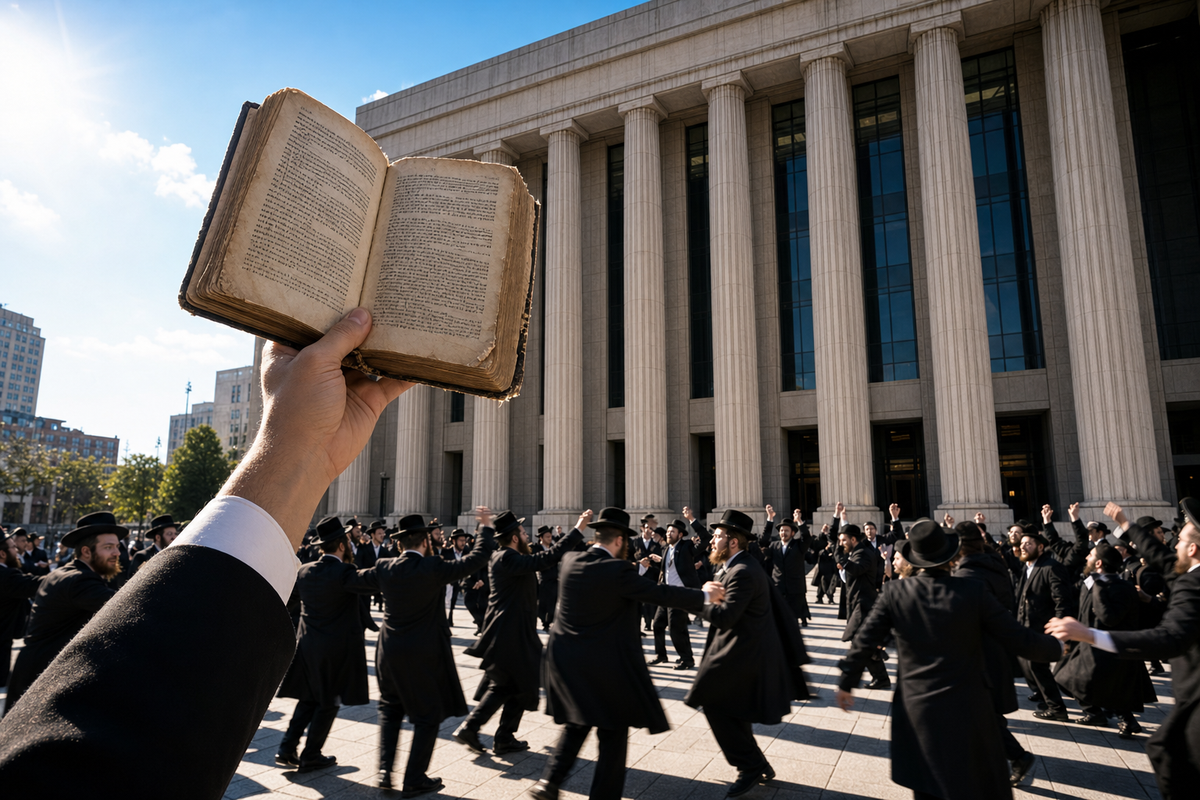
When Morinu HaRav Eliezer Berland shlit"a returned to the Holy Land, the forces of falsehood attempted to fight against him. The students clung to pure faith and proved that there is none besides Him.
A Story About the War of Faith Upon the Tzaddik's Return to the Holy Land
When Morinu HaRav Eliezer Berland shlit"a returned to the Holy Land, the joy among all his students and loved ones broke all boundaries and knew no end. Everyone tangibly felt the words of our Sages, that when the tzaddik is in the city—he is its glory, he is its splendor, and he is its majesty. The great light that the Rav shlit"a brought with him illuminated all hearts, and there was a feeling of immense spiritual elevation.
The War of the Forces of Falsehood
However, as is the way of matters of holiness, in opposition to the great light, forces of resistance also awakened. The Sitra Achra (the Other Side, forces of impurity) and the forces of evil could not bear the light, and they initiated a new and difficult war. They operated in various ways until they arrested the tzaddik, in an attempt to extinguish the flame of faith.
The forces of falsehood constantly operate from a mindset of "my strength and the might of my hand," which is the very essence of the kelipah (spiritual impurity) of Amalek who "happened upon you on the way" (representing spiritual coldness and happenstance). They mistakenly think that human power can act and operate in this world as they please, acting out of arrogance and complete disconnection from the Creator.
The Craft of Our Forefathers is in Our Hands
But the students of the tzaddik did not despair for a moment. Immediately, they took up the craft of our forefathers in their hands, and began crying out and pleading to our Father in Heaven. They knew well the ancient secret: "The voice is the voice of Jacob, but the hands are the hands of Esau."
The final war of the Ikveta d'Meshicha (the footsteps of Mashiach), which is the war of Gog and Magog, is not a physical war but a war over holy faith. In this, one can clearly see that the entire battle of the tzaddik and the people of the tzaddik revolves around one single point: Hashem, May He be blessed, and there is none besides Him.
Ultimately, we know and believe with complete faith that all control is in the hands of Heaven. As our Sages taught us, "A person does not stub his finger below unless it is decreed upon him from above." This is the pure faith that the path of the tzaddik instills in us, and by its light we will continue to walk forever.
A Story of Faith: The Dancing and Cries Outside the Courthouses for the Sake of the Tzaddik
When the news arrived that on a certain day a trial was being held for Morinu HaRav Eliezer Berland shlit"a in the city of Rishon LeZion, the masses did not remain indifferent. Already in the early hours of the morning, the place was bustling with a massive crowd of men, women, and children who came to support the tzaddik.
Sweetening the Judgments Through Dancing
As is the way of the students and followers of the tzaddik, they began with enthusiastic dancing in the area facing the courthouse. As our holy Rebbe Nachman zy"a (may his merit protect us all, Amen) said, through dancing, harsh judgments are sweetened. It was a tremendous Kiddush Hashem (sanctification of God's Name) to see a public of God-fearing and wholesome Jews, broken and crushed to the depths of their souls, coming in complete submission. There were no shouts of rage or quarrels there, but only standing in submission and with a broken heart.
Thus they danced and sang until the entire holy congregation had gathered. Together they began reciting The Tikkun HaKlali (the General Rectification) with tremendous spiritual awakening, continued with the recitation of Selichos (penitential prayers), and accepted the yoke of the Kingdom of Heaven in a loud voice. The cries and pleas pierced the heavens, until the joyous news arrived that, thank God, the judges had ruled to release the tzaddik.
Disappointment, Appeals, and the Continuation of the Struggle in Lod
However, the joy was short-lived. Immediately, those same people who forgot that "and for the informers let there be no hope" is a severe prohibition, filed an appeal demanding that the tzaddik not be released. May Hashem protect us and return everyone in complete teshuvah (repentance), for the tzaddik is entirely compassionate and grants complete forgiveness to all those who cause him sorrow and oppress him, and the main thing from his perspective is only that they return in teshuvah.
Due to our many sins, following the appeal, they refused to release the tzaddik. Afterward, another trial took place, this time in the city of Lod. And once again, a massive gathering was organized, accompanied by cries, pleas, and dancing that lasted for many long hours. Again the news arrived that the tzaddik was being released, but again an appeal was filed by those same people mentioned above.
This cycle of a trial, cries, a decision for release, and an appeal repeated itself no less than four times. Yet throughout the entire journey, the crowd never lost its faith and continued to stand with heroism, with dancing and cries to the heavens, out of a burning faith in the tzaddik and in the sweetening of the judgments.
A Story of Mesirus Nefesh (Self-Sacrifice): Those Who Follow the Tzaddik in the Wilderness and in Captivity
The holy Rebbe, Rebbe Nachman of Breslov zy"a, once said: "The world ought to wonder at the love that will be between us." This sentence takes on a tangible and moving meaning when observing the immense love and mesirus nefesh (self-sacrifice) of the students toward our teacher, Rabbi Eliezer Berland shlit"a. Throughout the entire period that the tzaddik spent in exile, his students did not leave him for a moment. They followed him everywhere, literally fulfilling the verse, "how you went after Me in the wilderness, in a land that was not sown."
A Tent of Torah Facing the Prison Walls
Even when the Rav returned to the Holy Land and was forced to stay in prison, the mesirus nefesh (self-sacrifice) of his followers only intensified. The students set up a special tent near the walls of the prison where the tzaddik was held, in order to remain as close to him as possible. The tzaddik's followers constantly arrived there, studied Torah with great diligence, and conducted Shabbos tables at the site with immense deveikus (spiritual attachment).
Initially, this tent was set up near the Be'er Sheva prison, and later it wandered together with the Rav to face the Tzalmon prison. Only Hashem, May He be blessed, knows and bears witness to the suffering, the hardship, and the exile that the tzaddik and his followers endured throughout that entire long period. The students gave up the comforts of their lives, left their homes, and did not consider themselves at all, doing everything out of pure love.
A Tremendous Commotion in Heaven
It is completely impossible to fathom the tremendous commotion that this mesirus nefesh (self-sacrifice) caused in Heaven. Hashem sees how His beloved children give up everything and are willing to suffer for Hashem, May He be blessed, and for His faithful servants, who serve Him with self-sacrifice day and night.
There is no doubt that this love and this rare mesirus nefesh (self-sacrifice) sweeten all the harsh judgments. This merit draws down an immense abundance of loving-kindness and mercy upon all of Am Yisrael, and testifies more than anything to the eternal and unbreakable bond between the tzaddik and his students.
From Issue 79 — Parashas Masei
From the series "A Tzaddik Rules in the Fear of God" — "Shapir Amar Nachmani" publications
Subscribe to Our Newsletter
Receive Torah articles and inspiration directly in your inbox