Watch: Rabbi Eliezer Berland shlit"a in a Class for Strengthening Youth, the Young Men of "HaMisgeret": "You Are the Most Important Young Men" — On the Greatness of Torah and the Beis HaMikdash That Was Not Destroyed
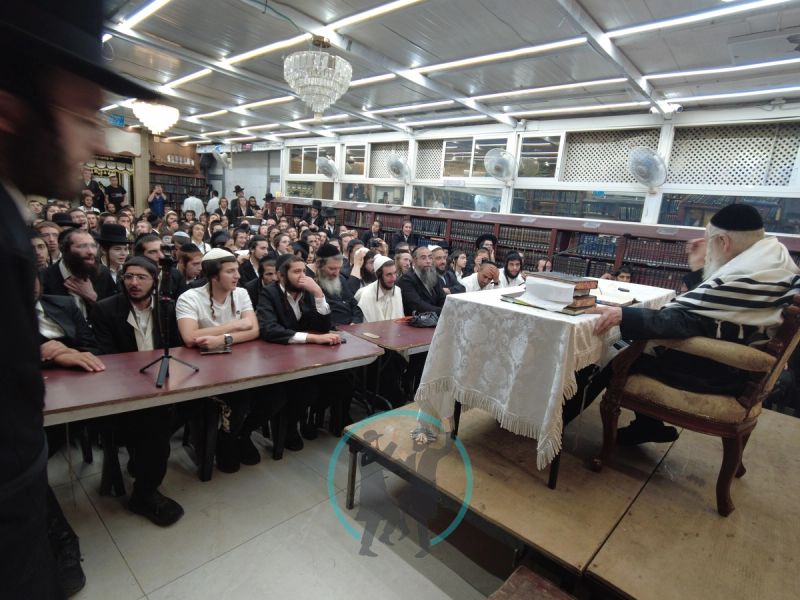
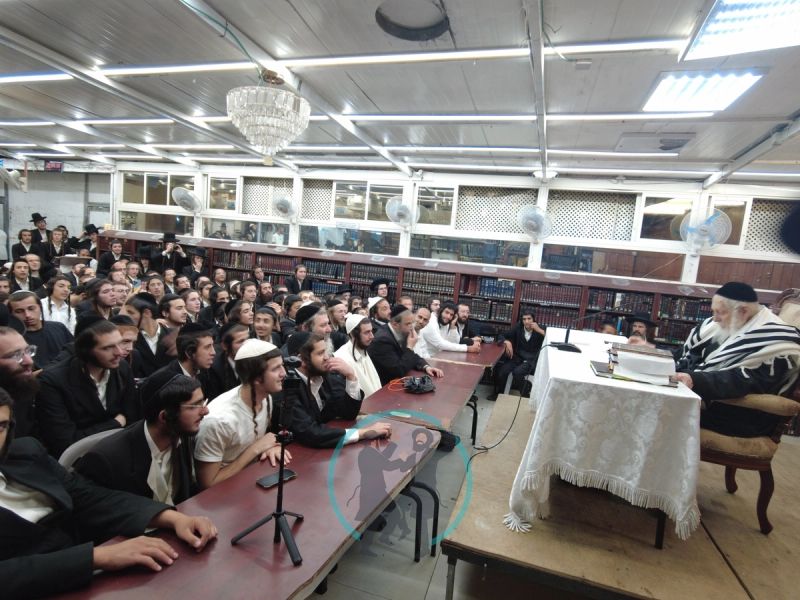
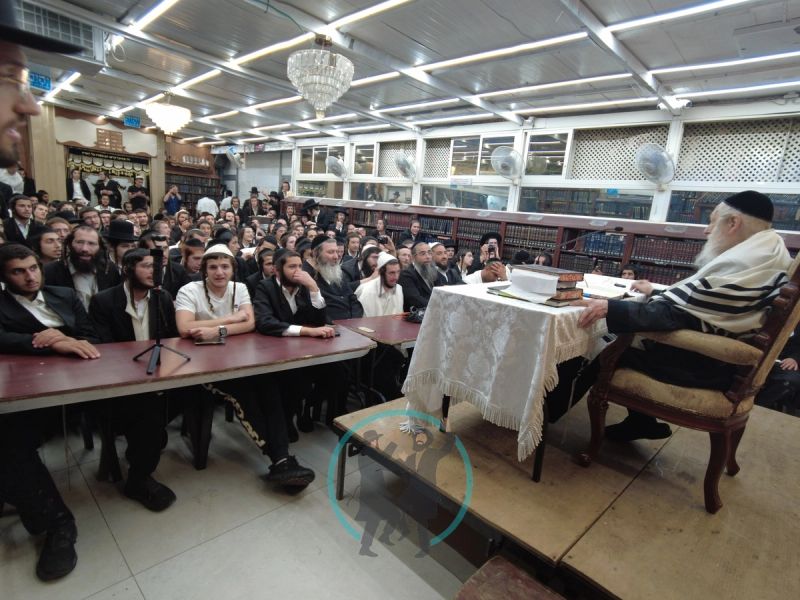
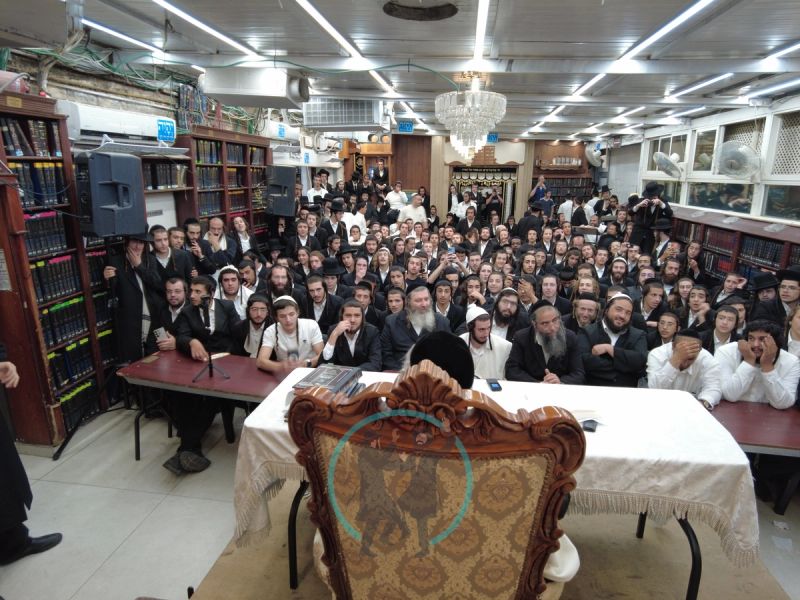
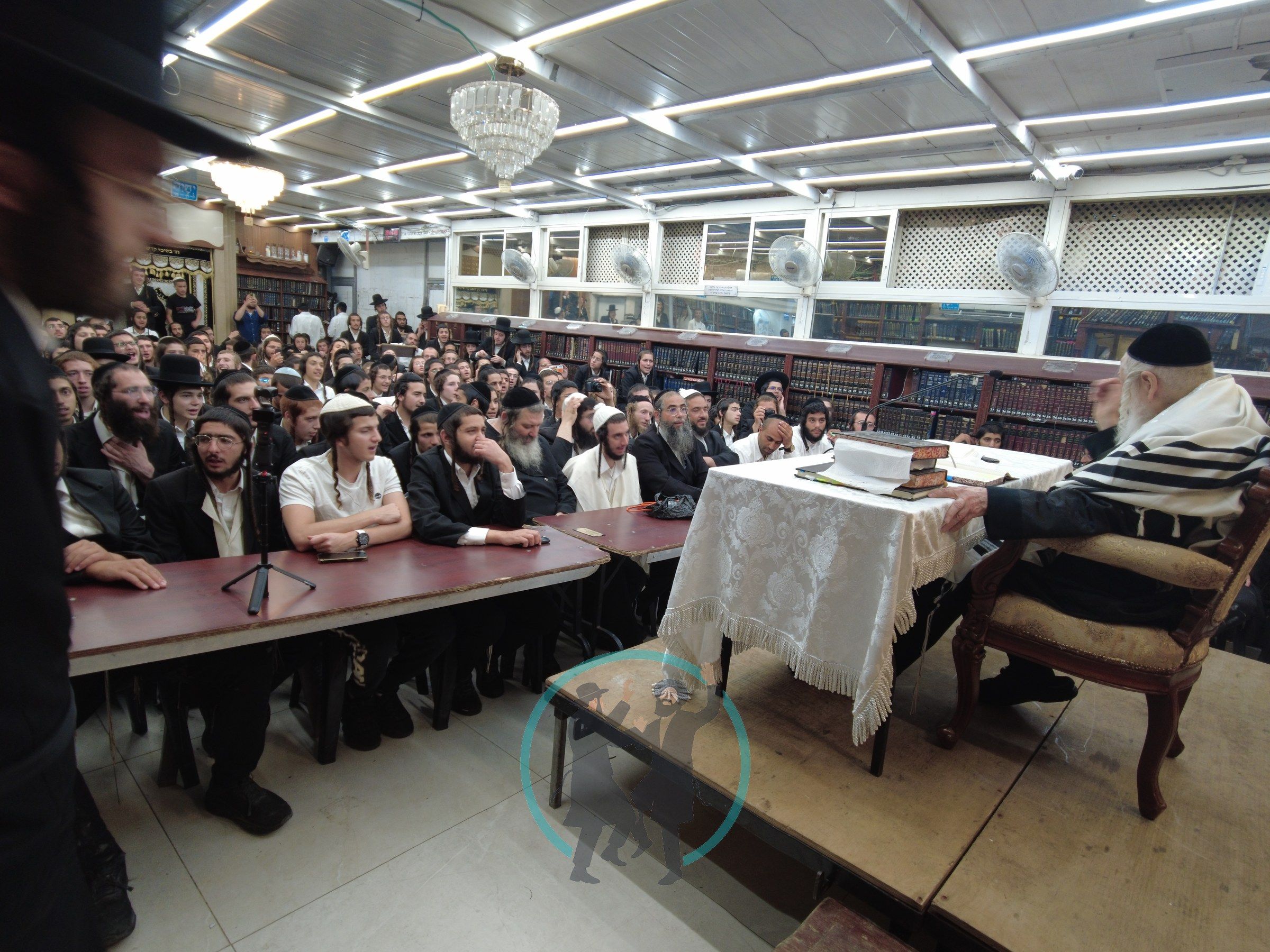
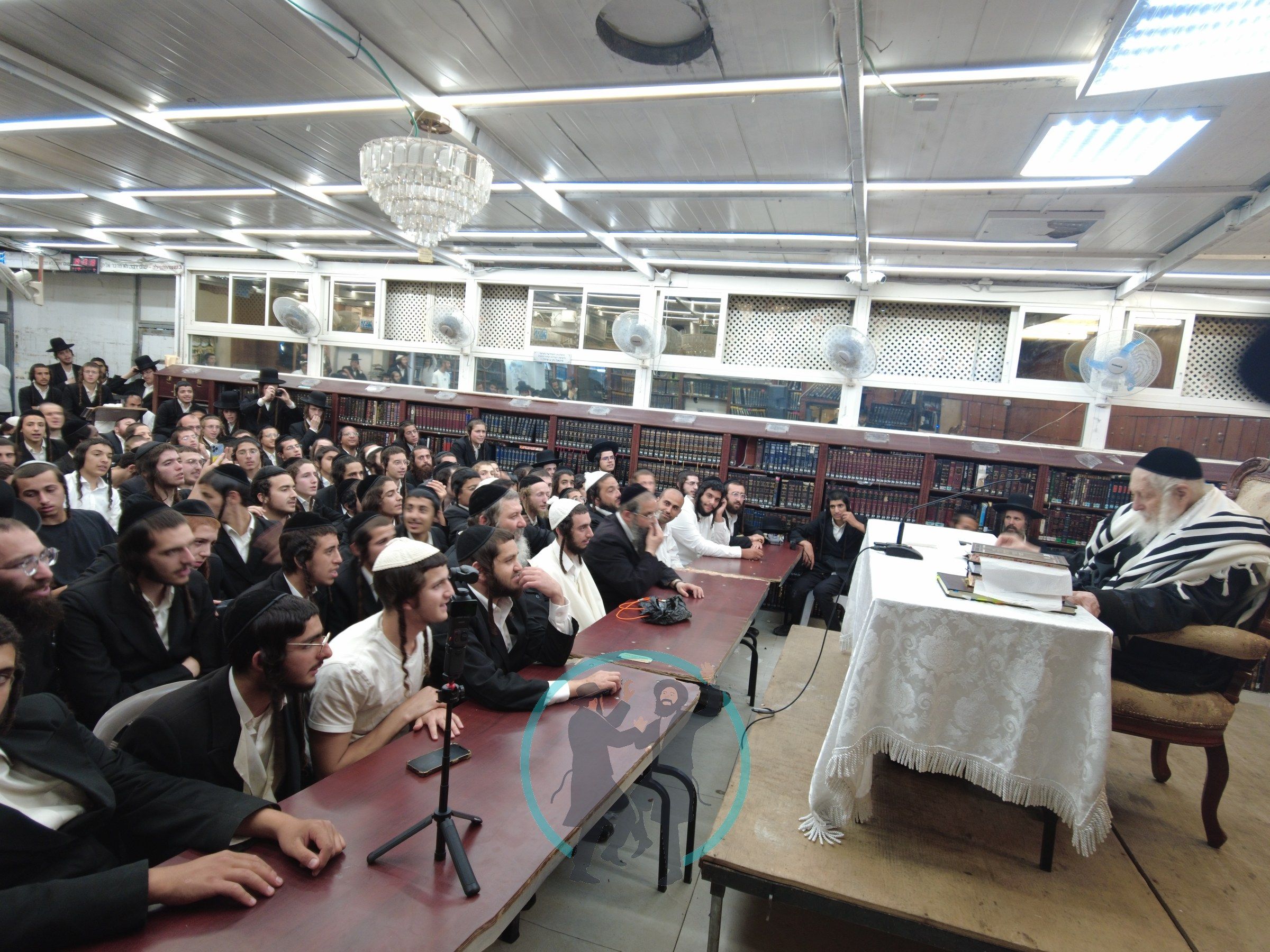
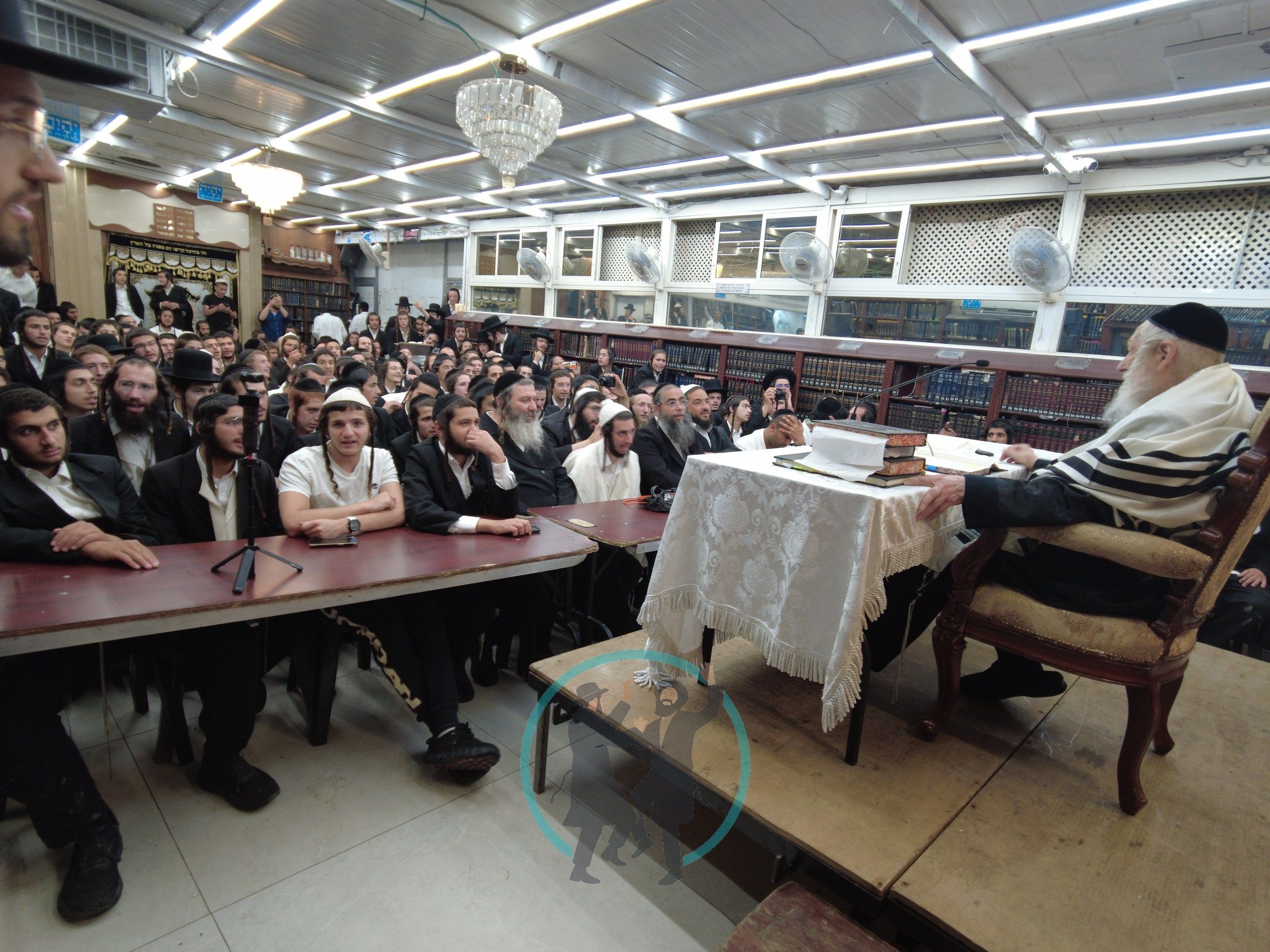
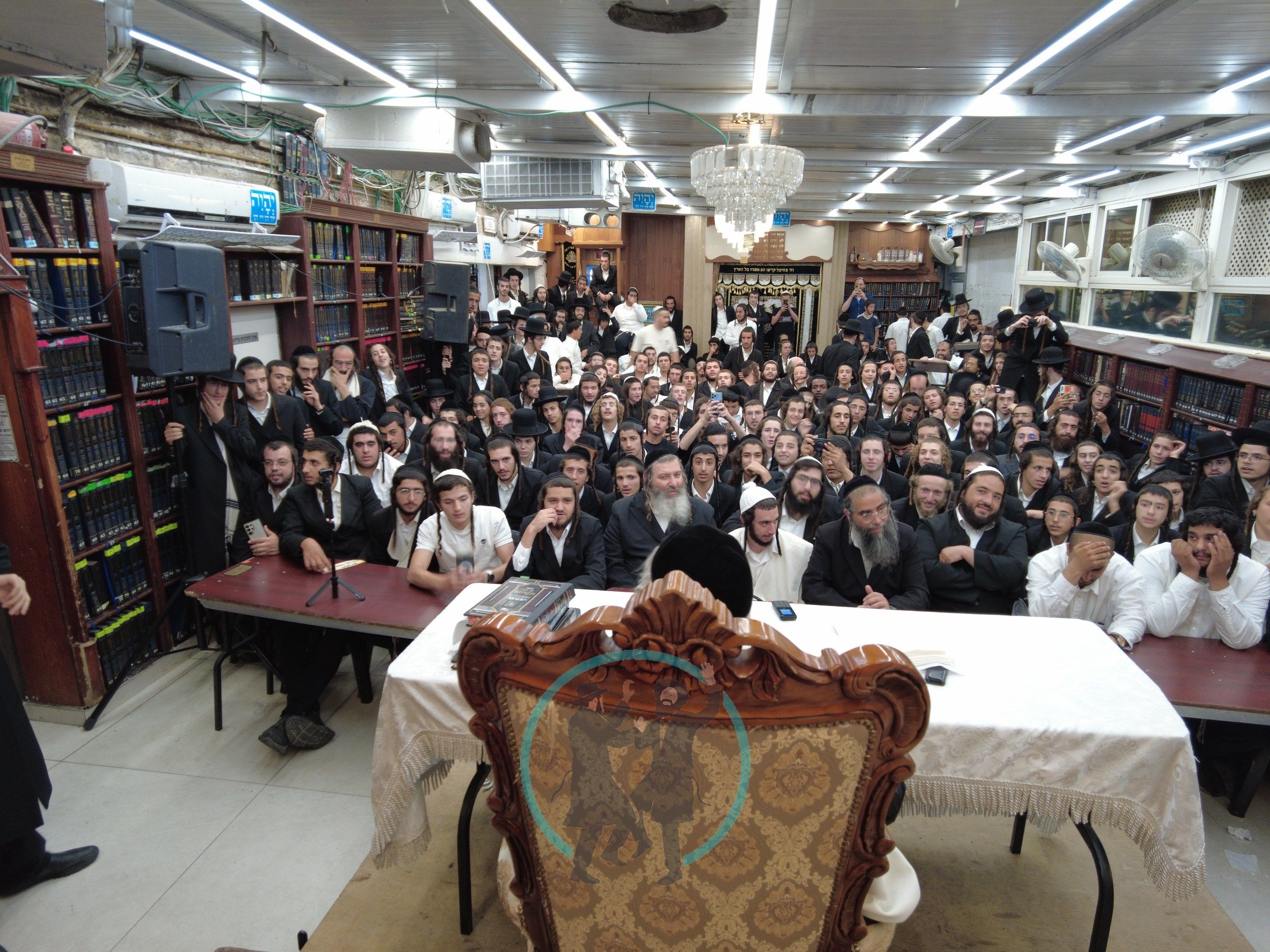
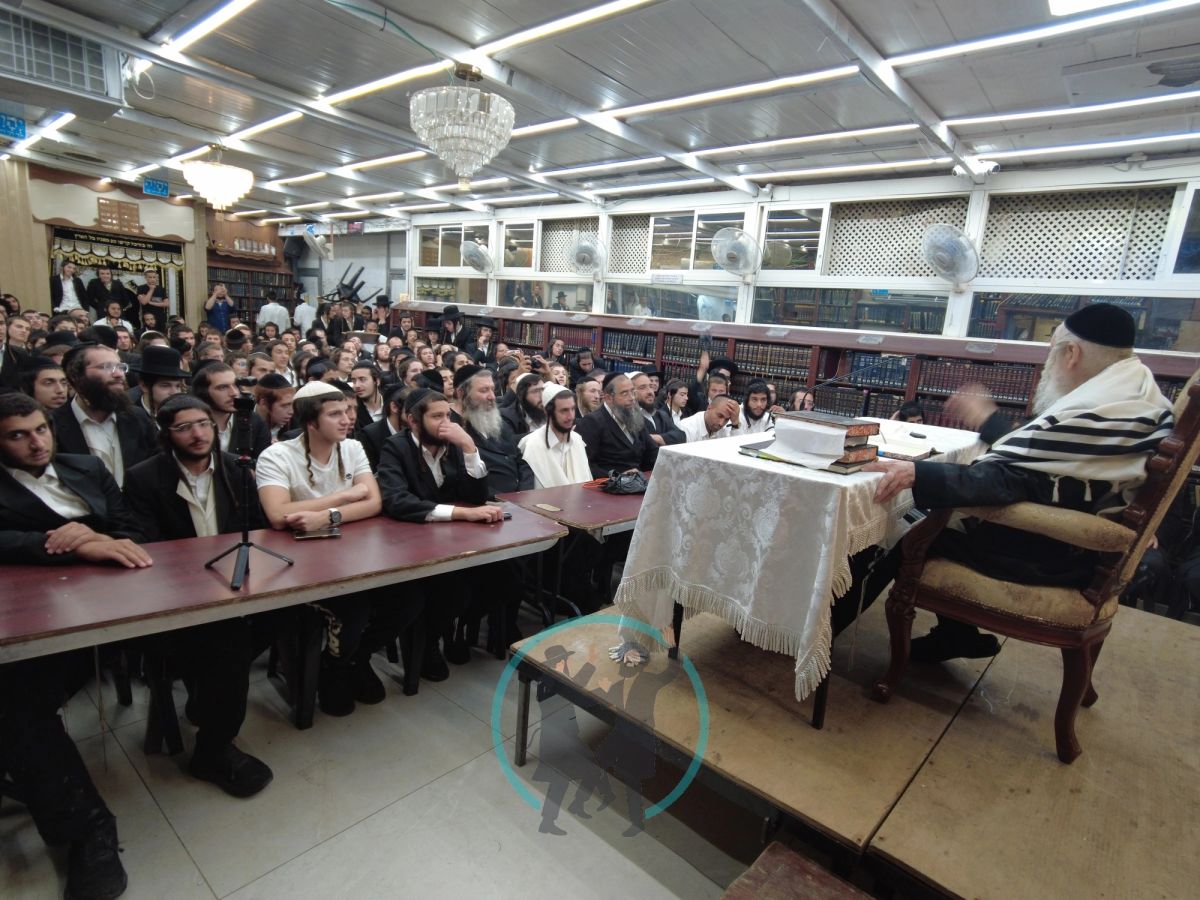
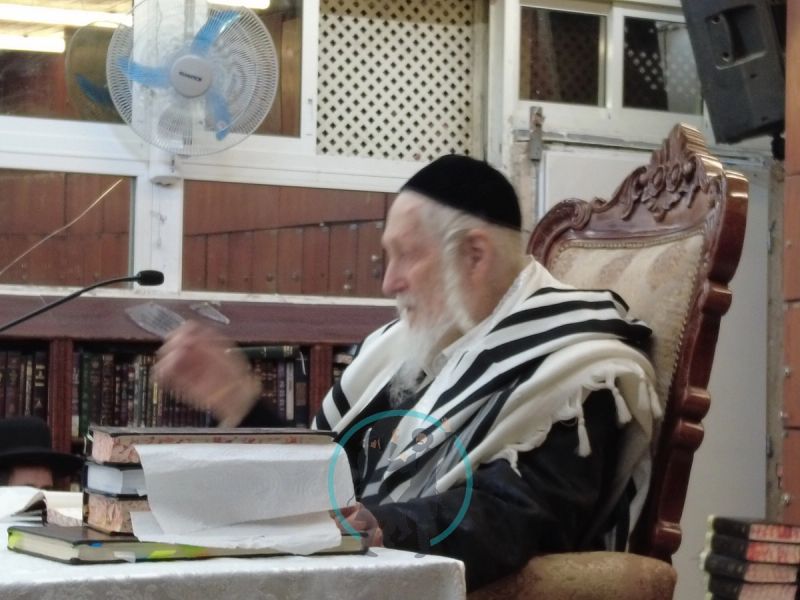
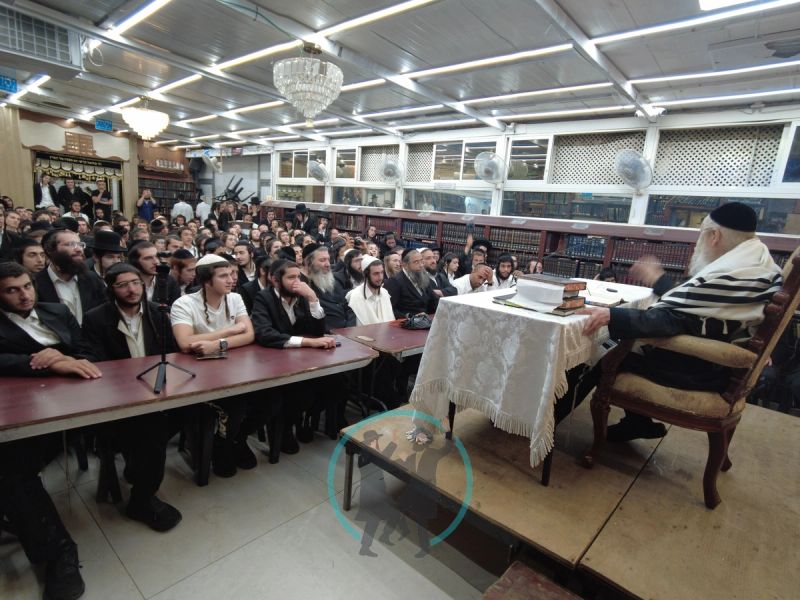
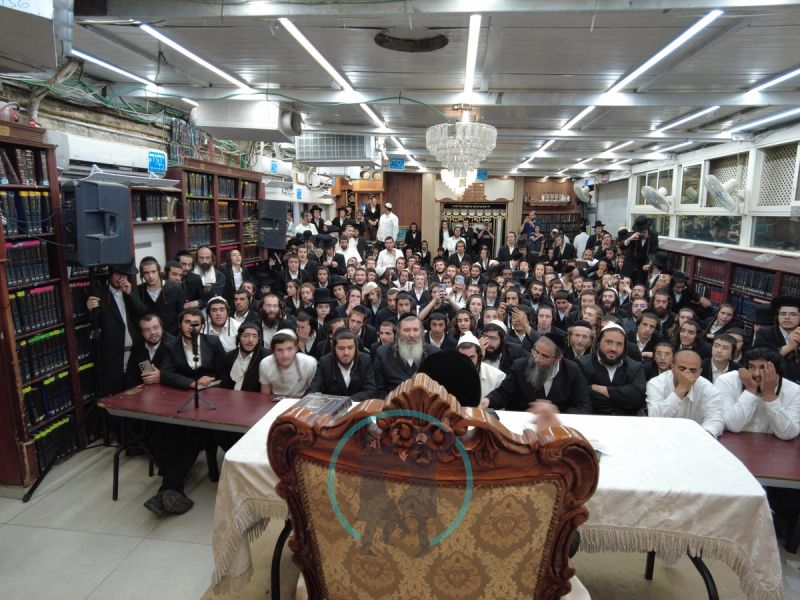
**On the 6th of Av, in the midst of the Three Weeks (Yemei Bein HaMetzarim) and approaching Tisha B'Av, the youth of "HaMisgeret" — young men strengthening their observance — gathered in the prayer hall beneath the home of Rabbi Eliezer Berland shlit"a to hear an inspiring class. The Rav opened with direct words of love and encouragement for them, continued to speak about the greatness of Torah study and diligence — up to completing the entire Shas (Talmud) — through learning Rashi and Likutey Halachos, and revealed a breathtaking message for the Three Weeks: The Beis HaMikdash (Holy Temple) was not destroyed at all; rather, it undergoes a renovation of diamonds every single day.**
שיעור מורנו הרב אליעזר ברלנד שליט"א לנוער המתחזק · ו' באב תשפ"ו
"You Are the Most Important Young Men"
Rabbi Berland shlit"a opened by turning directly to the young men sitting before him, the youth of "HaMisgeret": You are the most important young men. Specifically the youth who chose to strengthen themselves and enter under the wings of the Torah — they are the most precious in the eyes of Heaven. With these words of love and faith in the power of each and every one, the Rav began the class, guiding the youth toward the greatness in Torah that each of them is capable of achieving.
It Is Possible to Complete the Entire Shas
From there, the Rav went on to describe the schedule of the day and night, and what can be achieved within it: It is possible to complete the entire Shas. One can sleep very little — three or four hours — and learn for most of the day. To sleep at nine and wake up at Chatzos (midnight), learning until the morning; to don tefillin as a vatik (praying at sunrise), and to utilize every hour. "Sleeping is just a waste — the brain degenerates," he said. "You can finish the entire Shas." Even on a long Shabbos, from eleven hours of study, one can complete eleven pages of Gemara. The Rav himself, who barely sleeps, is already "strolling through the supernal chambers."
"Sleeping is just a waste, the brain degenerates — you can finish the entire Shas. A person sleeps for three hours, then gets up and learns."
To illustrate how far one can reach with willpower, the Rav spoke about yeshiva students who climbed the highest mountain in the world, Mount Everest, and completed entire tractates while walking — a month of climbing on glaciers, culminating in a Siyum HaShas (completion of the Talmud) at the summit. "I saw people without legs climbing Everest," he said, "with only iron prosthetics, and they don't give up — they climb." There is no obstacle that stands in the way of someone who truly wants it.
Even Outside a "Framework" One Can Complete the Entire Shas — Like Hillel the Elder
Here, the Rav strengthened the youth with a crucial point: Even a young man who is not in any formal "framework" (misgeret) can complete the entire Shas. After all, Hillel the Elder himself was not in any framework — no yeshiva opened its doors to him. To enter the Beis Midrash (study hall), he had to pay an entrance fee, and once, when he didn't have the money, he climbed up and lay on the skylight on the roof, just to hear words of Torah. And despite this, Hillel became the leader of his generation. This is a direct message to every one of the young men sitting here: A "framework" is not a prerequisite for greatness. Whoever is willing to pay any price to enter the Torah will ultimately find the entire Torah opened before him, and he has the power to complete the entire Shas.
Learning Gemara and Rashi: "Rashi is True Stories, the Most Interesting"
The Rav urged the youth to learn Gemara — a page a day — and especially to learn Rashi on every single Torah portion: "Learn Rashi, now it is Parashas Devarim." Rashi, he said, is not dry text — "Rashi is true stories, these are the most interesting stories in the world." And the entire Torah is the most fascinating thing. While speaking, the Rav wove in wondrous accounts from the Gemara — the tunnel that Antoninus dug from Tiberias to Tzippori, and Hezekiah's tunnel beneath the wall: how they dug for long kilometers from both sides and met with absolute precision, without a compass or equipment — and from this, he highlighted the immense wisdom hidden in the Torah and in the world of Hashem. Again and again, the Rav returned to this foundation: There is nothing in the world more fascinating than the Torah — everything the world offers pales in comparison to its depth and beauty.
"The Torah is the most interesting thing in the world — you don't need anything else."
And whoever thinks that the Torah is only for idlers is mistaken. Antoninus, the Roman Emperor himself, would come every day to learn with Rebbi (Rabbi Yehudah HaNasi), through that very tunnel. A person can be a king, a prime minister, or a finance minister, and at night sit and write chiddushei Torah (novel Torah insights): Samson Wertheimer, who served as a minister in the royal courts and rode a white horse with a golden sword from the king — at night, he sat and wrote his commentary, "Mishneh LaMelech," on the Rambam. There is no status or occupation that exempts a person from the Torah.
Likutey Halachos at Night, and the Shechinah in Nature
The Rav specifically encouraged learning Likutey Halachos at night — with a "shining face" until five in the morning. From there, he noted the great merit of one who lives in the Land of Israel: to go out into the fields and mountains, to recite Tehillim (Psalms) and The Tikkun HaKlali, and to truly feel the Shechinah (Divine Presence). "The song and the nature," he called it — walking on Mount Carmel and Mount Tavor, where Devorah the Prophetess sang her song, and all the mountains connect to Mount Moriah. "You literally feel the Shechinah from Heaven," he said, "and all of this is written in Likutey Halachos."
The Beis HaMikdash Was Not Destroyed — It is Undergoing a Diamond Renovation
Here, the Rav reached the climax of the class, delivering a thrilling message for the Three Weeks: "Tisha B'Av — was the Beis HaMikdash burned? In truth, it was not burned." The Beis HaMikdash was not destroyed at all — it was lifted upward, "and His sanctuary was elevated," and since then, Hashem has been renovating it every single day. Every day, a new diamond of thirty by thirty amos (cubits) is set into it, sapphire and precious stones, just as the prophet foretells in the Haftarah of Consolation: "O afflicted, storm-tossed one, who has not been consoled; behold, I will set your stones with fair colors and lay your foundations with sapphires. And I will make your windows of rubies, and your gates of carbuncles (avnei ekdach)." "Avnei ekdach," the Rav explained, "is a type of diamond in which you can see fire." We are not mourning a lost house, but a house that is continually being built — day after day, until it will descend, perfected and visible to all.
"Tisha B'Av, the Beis HaMikdash was burned — in truth, it was not burned. It just underwent a renovation, He lifted it upward. Every day they place a diamond in it."
"Everything is Just the Introduction": All the Noise is the Trailer Before the Geulah
The Rav elaborated on the End of Days, reassuring the youth: There is no need to panic from all the noise and turmoil at the end of the exile. "Gog and Magog — this is just the introduction," he said; "every movie has an introduction." Everything we see now is nothing but the short opening, the "trailer" that runs before the real feature — the complete Geulah (Redemption). One should not be frightened by the "introduction"; it merely heralds the great plot that will surely follow. In the same breath, the Rav depicted the ultimate purpose — a world where there will be room for every Jew to sit and learn Torah, and even the massive skyscrapers of today, hundreds of stories high, will all be filled with people learning Torah, "and there will be room for everyone." The entire grand edifice of history is nothing but a preparation for the moment when all of Israel will sit and engage in Torah.
Rabbi Shmuel Shapiro zt"l: Crying Out to Hashem Until the Soul is Exhausted
The Rav spoke with emotion about the tzaddik Rabbi Shmuel Shapiro zt"l, one of the greatest Breslov Chassidim, who was famous for his cries to Hashem. He would cry out and beg Hashem with all his might, "until the soul was exhausted." Such was his self-sacrifice in the service of prayer that he would stand in the freezing cold of thirty degrees below zero — dressed only in summer clothes and a thin velvet hat — and not feel the cold at all, completely immersed in his cry to the Creator of the world. This simple and genuine cry, from the depths of the heart, is what brings about salvations.
The Power of a Single Prayer: The Story of the City of Kokura
To illustrate the power of a single prayer, the Rav told the story of the city of Kokura in Japan. During the war, he recounted, a plane was sent to drop a bomb on it — and behold, in the middle of the day, one Jew there cried out "Hashem, please save us!" with all his might, put on tefillin, and cried out again and again. Suddenly, a heavy fog descended and covered the city, and the plane was unable to drop the bomb on Kokura. One prayer, with power, from a single Jew — saved an entire city. Such is the power of a genuine cry to Hashem.
Let the Good Inclination Overcome the Evil Inclination: The Story of the Dying Man on Erev Pesach
Alongside the greatness of Torah, the Rav imparted a profound moral lesson through a moving story. A man was returning home on Erev Pesach (the eve of Passover), ten minutes before sunset, carrying new shoes and clothes for his ten children — a once-a-year purchase that all the children were anticipating. On the way, he found a dying man pleading to be brought into the city. Two voices battled within him: one voice whispered — hurry home, the children are waiting; and the second voice — save a soul. "Let the good inclination overcome the evil inclination — first and foremost, you save a person," he decided. He brought the dying man into the city and saved him, trusting that Hashem would provide his children with what was theirs. "A person always hears two voices," the Rav concluded, "and one must know which is the right voice."
"A person hears two voices — one must always know which is the right voice. First and foremost, you save a person."
Practical Message
**You Are the Most Precious** — The youth who chose to strengthen themselves in Torah are the most important in the eyes of Heaven. Do not underestimate your power.
**Fill the Day and Night with Torah** — One can sleep little and complete the entire Shas; a page of Gemara a day, praying as a vatik, and utilizing every hour. Like Hillel, and with no obstacle standing in the way — like the climbers of Everest.
**Rashi on Every Parashah, and Likutey Halachos at Night** — "True stories," the gateway to the depth of the Torah portion; and the Shechinah felt in the fields and mountains.
**Do Not Panic from the Noise** — All the turmoil of the End of Days is just the "trailer" before the Geulah (Redemption); behind it lies a world entirely of Torah.
**The Power of the Cry** — A simple and genuine cry to Hashem, from the depths of the heart, brings about salvations — following the path of the tzaddik Rabbi Shmuel Shapiro zt"l.
**The Decision of the Good Inclination** — When two voices battle within you, choose the voice of the mitzvah and saving others, not the calculations of the evil inclination.
Photo Gallery from the Class
Subscribe to Our Newsletter
Receive Torah articles and inspiration directly in your inbox
 Even Outside a "Framework" One Can Complete the Entire Shas — Like Hillel the Elder
Here, the Rav strengthened the youth with a crucial point: Even a young man who is not in any formal "framework" (misgeret) can complete the entire Shas. After all, Hillel the Elder himself was not in any framework — no yeshiva opened its doors to him. To enter the Beis Midrash (study hall), he had to pay an entrance fee, and once, when he didn't have the money, he climbed up and lay on the skylight on the roof, just to hear words of Torah. And despite this, Hillel became the leader of his generation. This is a direct message to every one of the young men sitting here: A "framework" is not a prerequisite for greatness. Whoever is willing to pay any price to enter the Torah will ultimately find the entire Torah opened before him, and he has the power to complete the entire Shas.
Learning Gemara and Rashi: "Rashi is True Stories, the Most Interesting"
The Rav urged the youth to learn Gemara — a page a day — and especially to learn Rashi on every single Torah portion: "Learn Rashi, now it is Parashas Devarim." Rashi, he said, is not dry text — "Rashi is true stories, these are the most interesting stories in the world." And the entire Torah is the most fascinating thing. While speaking, the Rav wove in wondrous accounts from the Gemara — the tunnel that Antoninus dug from Tiberias to Tzippori, and Hezekiah's tunnel beneath the wall: how they dug for long kilometers from both sides and met with absolute precision, without a compass or equipment — and from this, he highlighted the immense wisdom hidden in the Torah and in the world of Hashem. Again and again, the Rav returned to this foundation: There is nothing in the world more fascinating than the Torah — everything the world offers pales in comparison to its depth and beauty.
"The Torah is the most interesting thing in the world — you don't need anything else."
And whoever thinks that the Torah is only for idlers is mistaken. Antoninus, the Roman Emperor himself, would come every day to learn with Rebbi (Rabbi Yehudah HaNasi), through that very tunnel. A person can be a king, a prime minister, or a finance minister, and at night sit and write chiddushei Torah (novel Torah insights): Samson Wertheimer, who served as a minister in the royal courts and rode a white horse with a golden sword from the king — at night, he sat and wrote his commentary, "Mishneh LaMelech," on the Rambam. There is no status or occupation that exempts a person from the Torah.
Even Outside a "Framework" One Can Complete the Entire Shas — Like Hillel the Elder
Here, the Rav strengthened the youth with a crucial point: Even a young man who is not in any formal "framework" (misgeret) can complete the entire Shas. After all, Hillel the Elder himself was not in any framework — no yeshiva opened its doors to him. To enter the Beis Midrash (study hall), he had to pay an entrance fee, and once, when he didn't have the money, he climbed up and lay on the skylight on the roof, just to hear words of Torah. And despite this, Hillel became the leader of his generation. This is a direct message to every one of the young men sitting here: A "framework" is not a prerequisite for greatness. Whoever is willing to pay any price to enter the Torah will ultimately find the entire Torah opened before him, and he has the power to complete the entire Shas.
Learning Gemara and Rashi: "Rashi is True Stories, the Most Interesting"
The Rav urged the youth to learn Gemara — a page a day — and especially to learn Rashi on every single Torah portion: "Learn Rashi, now it is Parashas Devarim." Rashi, he said, is not dry text — "Rashi is true stories, these are the most interesting stories in the world." And the entire Torah is the most fascinating thing. While speaking, the Rav wove in wondrous accounts from the Gemara — the tunnel that Antoninus dug from Tiberias to Tzippori, and Hezekiah's tunnel beneath the wall: how they dug for long kilometers from both sides and met with absolute precision, without a compass or equipment — and from this, he highlighted the immense wisdom hidden in the Torah and in the world of Hashem. Again and again, the Rav returned to this foundation: There is nothing in the world more fascinating than the Torah — everything the world offers pales in comparison to its depth and beauty.
"The Torah is the most interesting thing in the world — you don't need anything else."
And whoever thinks that the Torah is only for idlers is mistaken. Antoninus, the Roman Emperor himself, would come every day to learn with Rebbi (Rabbi Yehudah HaNasi), through that very tunnel. A person can be a king, a prime minister, or a finance minister, and at night sit and write chiddushei Torah (novel Torah insights): Samson Wertheimer, who served as a minister in the royal courts and rode a white horse with a golden sword from the king — at night, he sat and wrote his commentary, "Mishneh LaMelech," on the Rambam. There is no status or occupation that exempts a person from the Torah.
 Likutey Halachos at Night, and the Shechinah in Nature
The Rav specifically encouraged learning Likutey Halachos at night — with a "shining face" until five in the morning. From there, he noted the great merit of one who lives in the Land of Israel: to go out into the fields and mountains, to recite Tehillim (Psalms) and The Tikkun HaKlali, and to truly feel the Shechinah (Divine Presence). "The song and the nature," he called it — walking on Mount Carmel and Mount Tavor, where Devorah the Prophetess sang her song, and all the mountains connect to Mount Moriah. "You literally feel the Shechinah from Heaven," he said, "and all of this is written in Likutey Halachos."
The Beis HaMikdash Was Not Destroyed — It is Undergoing a Diamond Renovation
Here, the Rav reached the climax of the class, delivering a thrilling message for the Three Weeks: "Tisha B'Av — was the Beis HaMikdash burned? In truth, it was not burned." The Beis HaMikdash was not destroyed at all — it was lifted upward, "and His sanctuary was elevated," and since then, Hashem has been renovating it every single day. Every day, a new diamond of thirty by thirty amos (cubits) is set into it, sapphire and precious stones, just as the prophet foretells in the Haftarah of Consolation: "O afflicted, storm-tossed one, who has not been consoled; behold, I will set your stones with fair colors and lay your foundations with sapphires. And I will make your windows of rubies, and your gates of carbuncles (avnei ekdach)." "Avnei ekdach," the Rav explained, "is a type of diamond in which you can see fire." We are not mourning a lost house, but a house that is continually being built — day after day, until it will descend, perfected and visible to all.
"Tisha B'Av, the Beis HaMikdash was burned — in truth, it was not burned. It just underwent a renovation, He lifted it upward. Every day they place a diamond in it."
Likutey Halachos at Night, and the Shechinah in Nature
The Rav specifically encouraged learning Likutey Halachos at night — with a "shining face" until five in the morning. From there, he noted the great merit of one who lives in the Land of Israel: to go out into the fields and mountains, to recite Tehillim (Psalms) and The Tikkun HaKlali, and to truly feel the Shechinah (Divine Presence). "The song and the nature," he called it — walking on Mount Carmel and Mount Tavor, where Devorah the Prophetess sang her song, and all the mountains connect to Mount Moriah. "You literally feel the Shechinah from Heaven," he said, "and all of this is written in Likutey Halachos."
The Beis HaMikdash Was Not Destroyed — It is Undergoing a Diamond Renovation
Here, the Rav reached the climax of the class, delivering a thrilling message for the Three Weeks: "Tisha B'Av — was the Beis HaMikdash burned? In truth, it was not burned." The Beis HaMikdash was not destroyed at all — it was lifted upward, "and His sanctuary was elevated," and since then, Hashem has been renovating it every single day. Every day, a new diamond of thirty by thirty amos (cubits) is set into it, sapphire and precious stones, just as the prophet foretells in the Haftarah of Consolation: "O afflicted, storm-tossed one, who has not been consoled; behold, I will set your stones with fair colors and lay your foundations with sapphires. And I will make your windows of rubies, and your gates of carbuncles (avnei ekdach)." "Avnei ekdach," the Rav explained, "is a type of diamond in which you can see fire." We are not mourning a lost house, but a house that is continually being built — day after day, until it will descend, perfected and visible to all.
"Tisha B'Av, the Beis HaMikdash was burned — in truth, it was not burned. It just underwent a renovation, He lifted it upward. Every day they place a diamond in it."
 "Everything is Just the Introduction": All the Noise is the Trailer Before the Geulah
The Rav elaborated on the End of Days, reassuring the youth: There is no need to panic from all the noise and turmoil at the end of the exile. "Gog and Magog — this is just the introduction," he said; "every movie has an introduction." Everything we see now is nothing but the short opening, the "trailer" that runs before the real feature — the complete Geulah (Redemption). One should not be frightened by the "introduction"; it merely heralds the great plot that will surely follow. In the same breath, the Rav depicted the ultimate purpose — a world where there will be room for every Jew to sit and learn Torah, and even the massive skyscrapers of today, hundreds of stories high, will all be filled with people learning Torah, "and there will be room for everyone." The entire grand edifice of history is nothing but a preparation for the moment when all of Israel will sit and engage in Torah.
Rabbi Shmuel Shapiro zt"l: Crying Out to Hashem Until the Soul is Exhausted
The Rav spoke with emotion about the tzaddik Rabbi Shmuel Shapiro zt"l, one of the greatest Breslov Chassidim, who was famous for his cries to Hashem. He would cry out and beg Hashem with all his might, "until the soul was exhausted." Such was his self-sacrifice in the service of prayer that he would stand in the freezing cold of thirty degrees below zero — dressed only in summer clothes and a thin velvet hat — and not feel the cold at all, completely immersed in his cry to the Creator of the world. This simple and genuine cry, from the depths of the heart, is what brings about salvations.
The Power of a Single Prayer: The Story of the City of Kokura
To illustrate the power of a single prayer, the Rav told the story of the city of Kokura in Japan. During the war, he recounted, a plane was sent to drop a bomb on it — and behold, in the middle of the day, one Jew there cried out "Hashem, please save us!" with all his might, put on tefillin, and cried out again and again. Suddenly, a heavy fog descended and covered the city, and the plane was unable to drop the bomb on Kokura. One prayer, with power, from a single Jew — saved an entire city. Such is the power of a genuine cry to Hashem.
Let the Good Inclination Overcome the Evil Inclination: The Story of the Dying Man on Erev Pesach
Alongside the greatness of Torah, the Rav imparted a profound moral lesson through a moving story. A man was returning home on Erev Pesach (the eve of Passover), ten minutes before sunset, carrying new shoes and clothes for his ten children — a once-a-year purchase that all the children were anticipating. On the way, he found a dying man pleading to be brought into the city. Two voices battled within him: one voice whispered — hurry home, the children are waiting; and the second voice — save a soul. "Let the good inclination overcome the evil inclination — first and foremost, you save a person," he decided. He brought the dying man into the city and saved him, trusting that Hashem would provide his children with what was theirs. "A person always hears two voices," the Rav concluded, "and one must know which is the right voice."
"A person hears two voices — one must always know which is the right voice. First and foremost, you save a person."
Practical Message
**You Are the Most Precious** — The youth who chose to strengthen themselves in Torah are the most important in the eyes of Heaven. Do not underestimate your power.
**Fill the Day and Night with Torah** — One can sleep little and complete the entire Shas; a page of Gemara a day, praying as a vatik, and utilizing every hour. Like Hillel, and with no obstacle standing in the way — like the climbers of Everest.
**Rashi on Every Parashah, and Likutey Halachos at Night** — "True stories," the gateway to the depth of the Torah portion; and the Shechinah felt in the fields and mountains.
**Do Not Panic from the Noise** — All the turmoil of the End of Days is just the "trailer" before the Geulah (Redemption); behind it lies a world entirely of Torah.
**The Power of the Cry** — A simple and genuine cry to Hashem, from the depths of the heart, brings about salvations — following the path of the tzaddik Rabbi Shmuel Shapiro zt"l.
**The Decision of the Good Inclination** — When two voices battle within you, choose the voice of the mitzvah and saving others, not the calculations of the evil inclination.
Photo Gallery from the Class
"Everything is Just the Introduction": All the Noise is the Trailer Before the Geulah
The Rav elaborated on the End of Days, reassuring the youth: There is no need to panic from all the noise and turmoil at the end of the exile. "Gog and Magog — this is just the introduction," he said; "every movie has an introduction." Everything we see now is nothing but the short opening, the "trailer" that runs before the real feature — the complete Geulah (Redemption). One should not be frightened by the "introduction"; it merely heralds the great plot that will surely follow. In the same breath, the Rav depicted the ultimate purpose — a world where there will be room for every Jew to sit and learn Torah, and even the massive skyscrapers of today, hundreds of stories high, will all be filled with people learning Torah, "and there will be room for everyone." The entire grand edifice of history is nothing but a preparation for the moment when all of Israel will sit and engage in Torah.
Rabbi Shmuel Shapiro zt"l: Crying Out to Hashem Until the Soul is Exhausted
The Rav spoke with emotion about the tzaddik Rabbi Shmuel Shapiro zt"l, one of the greatest Breslov Chassidim, who was famous for his cries to Hashem. He would cry out and beg Hashem with all his might, "until the soul was exhausted." Such was his self-sacrifice in the service of prayer that he would stand in the freezing cold of thirty degrees below zero — dressed only in summer clothes and a thin velvet hat — and not feel the cold at all, completely immersed in his cry to the Creator of the world. This simple and genuine cry, from the depths of the heart, is what brings about salvations.
The Power of a Single Prayer: The Story of the City of Kokura
To illustrate the power of a single prayer, the Rav told the story of the city of Kokura in Japan. During the war, he recounted, a plane was sent to drop a bomb on it — and behold, in the middle of the day, one Jew there cried out "Hashem, please save us!" with all his might, put on tefillin, and cried out again and again. Suddenly, a heavy fog descended and covered the city, and the plane was unable to drop the bomb on Kokura. One prayer, with power, from a single Jew — saved an entire city. Such is the power of a genuine cry to Hashem.
Let the Good Inclination Overcome the Evil Inclination: The Story of the Dying Man on Erev Pesach
Alongside the greatness of Torah, the Rav imparted a profound moral lesson through a moving story. A man was returning home on Erev Pesach (the eve of Passover), ten minutes before sunset, carrying new shoes and clothes for his ten children — a once-a-year purchase that all the children were anticipating. On the way, he found a dying man pleading to be brought into the city. Two voices battled within him: one voice whispered — hurry home, the children are waiting; and the second voice — save a soul. "Let the good inclination overcome the evil inclination — first and foremost, you save a person," he decided. He brought the dying man into the city and saved him, trusting that Hashem would provide his children with what was theirs. "A person always hears two voices," the Rav concluded, "and one must know which is the right voice."
"A person hears two voices — one must always know which is the right voice. First and foremost, you save a person."
Practical Message
**You Are the Most Precious** — The youth who chose to strengthen themselves in Torah are the most important in the eyes of Heaven. Do not underestimate your power.
**Fill the Day and Night with Torah** — One can sleep little and complete the entire Shas; a page of Gemara a day, praying as a vatik, and utilizing every hour. Like Hillel, and with no obstacle standing in the way — like the climbers of Everest.
**Rashi on Every Parashah, and Likutey Halachos at Night** — "True stories," the gateway to the depth of the Torah portion; and the Shechinah felt in the fields and mountains.
**Do Not Panic from the Noise** — All the turmoil of the End of Days is just the "trailer" before the Geulah (Redemption); behind it lies a world entirely of Torah.
**The Power of the Cry** — A simple and genuine cry to Hashem, from the depths of the heart, brings about salvations — following the path of the tzaddik Rabbi Shmuel Shapiro zt"l.
**The Decision of the Good Inclination** — When two voices battle within you, choose the voice of the mitzvah and saving others, not the calculations of the evil inclination.
Photo Gallery from the Class